The Tension Between Borders Tradition and Global Ambition
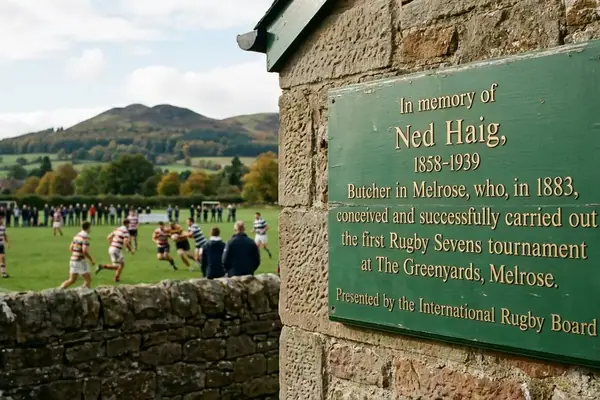
I spend my days buried in match results and team performance trends. When you look at the participation logs from the Kings of the Sevens circuit spanning 1995 to 2005, a clear narrative emerges. Ned Haig's invention of the game in 1883 created a fiercely protected local tradition at The Greenyards. For decades, the Borders clubs were the undisputed kings of their own castle.
But tradition can easily become stagnation.
Inviting international giants was a necessary evolution, not a betrayal of local roots. I remember the initial purist skepticism well. Fans and local committees feared that bringing in fully professional or elite university sides would turn local clubs into mere cannon fodder. We all share that protective instinct over our grassroots heritage. Yet, reviewing the participation logs from prior decades showed that adding external sides was the only way to elevate the standard of play. Decisions prioritized retaining the 1883 local circuit as the core while strategically injecting global talent.
Bottom Line: Retaining the historical local circuit is vital, but exposing homegrown talent to global standards prevents tactical decay.
The New Zealand Blueprint: Pace, Power, and Precision
How exactly did Southern Hemisphere teams change the way sevens was played in Scotland?
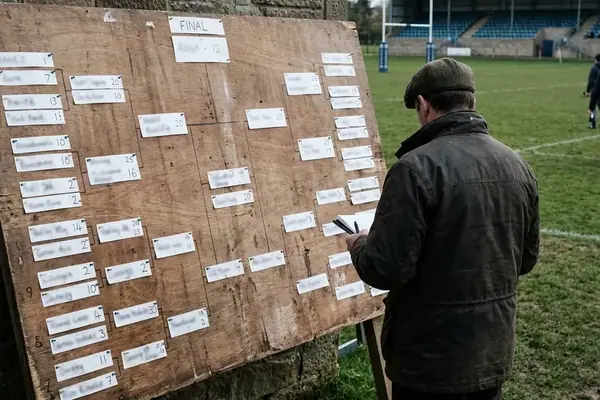
The answer lies in match footage from the late 90s and early 2000s. The selection of guest teams focused heavily on observed tactical shifts rather than excluding anyone based on professional status. Take the Christchurch Football Club. Their capture of the Telecom Trophy in the 1998-2002 range marked a definitive turning point in tournament standards. They brought a ruthless efficiency that local sides simply had not encountered.
Then came Ponsonby RFC from Auckland. Their matches during the 2003-2006 events forced Northern Hemisphere teams to completely rethink their defensive structures. Ponsonby played an expansive, high-tempo game that stretched defensive lines to their breaking point.
Field Note: When analyzing these historical shifts, look at the defensive spacing. The wider passing channels used by New Zealand teams required Borders clubs to abandon passive lines and adopt aggressive drift defenses.
The South African University Masterclass
While the Kiwis brought expansive width, the South Africans delivered sheer physicality and structured dominance. The inclusion criteria for these guest teams emphasized academy conditioning benchmarks drawn from direct performance comparisons.
Stellenbosch University RFC made appearances across five events between 1999 and 2007—executing a high-performance system rather than just playing a tournament. Their academy-level conditioning set a completely new benchmark for what was required to survive a full day of knockout rugby.
The ultimate example of this modern sevens athleticism arrived with the 2007 defending champions, Shimlas. The University of the Free State side utilized strict academy conditioning protocols to overpower opponents late in the second half. Activity data indicates that their sustained sprint speeds in the final minutes of matches were unmatched by amateur sides.
Why the 'Loss of Tradition' Argument Fails
It is easy for a casual observer to look at a bracket dominated by overseas teams and assume the event's heritage is being overshadowed. That beginner perspective is understandable. You see a local side struggling against a global powerhouse and wonder if the soul of the tournament is lost.
Progression in sport requires a measuring stick. Just as Uruguayan club strength is measured against the Scottish Premier League, local Borders teams use matches against giants like Shimlas or Fiji's Nawaka Rugby Club to gauge their true global standing. Counter-argument evaluation using historical participation records confirms that external challengers are a longstanding feature of the event.
- The Barbarians made their debut at the Jubilee Sevens in 1932.
- Cambridge University RFC secured a famous win in 1960.
The tournament has always thrived on testing local mettle against outside innovators.
Important: The developmental benefit of facing elite opposition varies by whether guest sides include academy versus senior players, and is most effective when preparation time for local sides falls below roughly a month.
A Blueprint for the Modern Sevens Festival
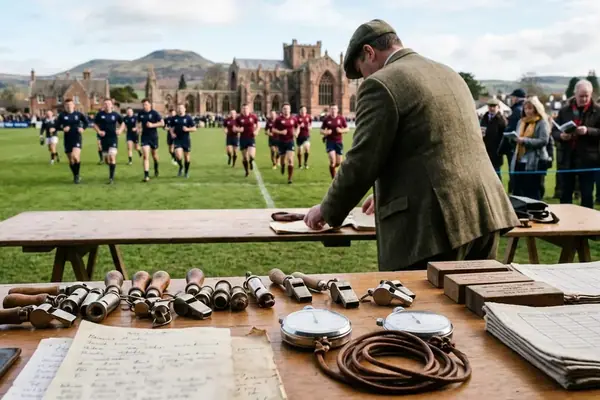
The modern Melrose Sevens successfully balances global elite play with a community festival atmosphere. This did not happen by accident. Infrastructure updates followed a rigorous review of attendance patterns, leading to expanded categories that serve the whole rugby community.
Convener Ian Cooper's vision drove much of this evolution. Between 2004 and 2008, the introduction of the tented village setup for retail and hospitality transformed the fan experience. It turned a simple rugby tournament into a comprehensive weekend event.
The 125th anniversary event on 12 April 2008 brought this strategy together. This milestone introduced new categories for youths, veterans, and the Ladies Centenary Cup. It proved that you can honor the history of rugby sevens while building a commercially viable, inclusive future. Long-term tracking demonstrates that blending elite international competition with grassroots participation creates a resilient, enduring tournament model.