The Legacy of the 2000s at the Greenyards
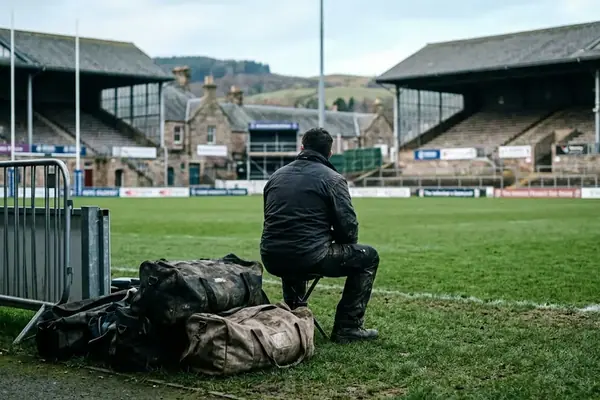
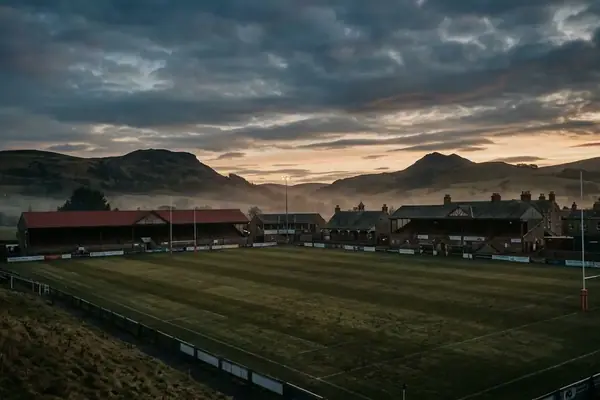
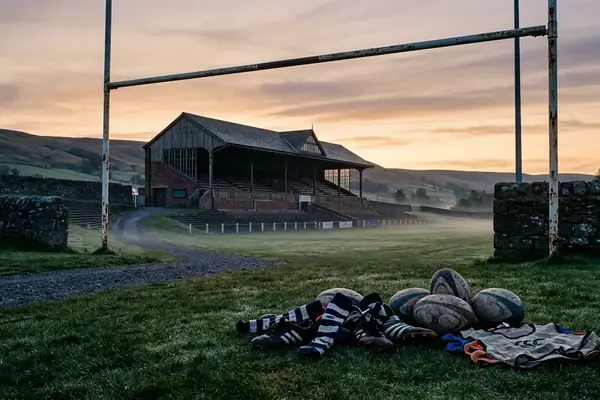
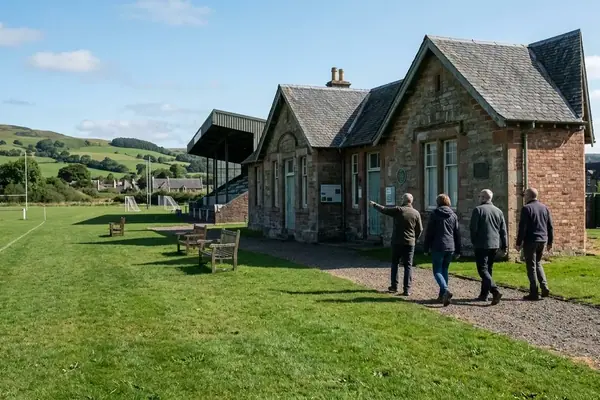
Every spring, the quiet Scottish Borders town of Melrose transforms. The Greenyards has been the undisputed spiritual home of rugby sevens since the format's inception. When Ned Haig invented this seven-a-side rugby union variant in 1883, he likely never imagined the global spectacle it would become. We have seven-a-side format records from 1883 onward, but the turn of the millennium marked a distinct shift in the tournament's competitive landscape.
By the time the 2000s arrived, the tournament had evolved into a fascinating crucible. Local Borders talent regularly clashed with heavy-hitting international guest sides. This decade redefined the competitive ceiling at Melrose RFC. The 2000-2009 match reports reveal a period where traditional grassroots rugby met the rising tide of professional athleticism.
Archival Scope and Selection Criteria
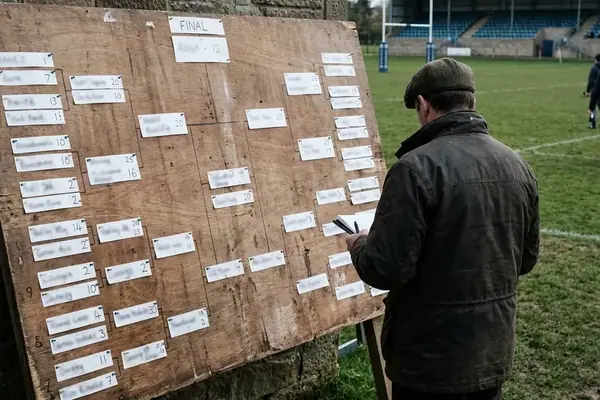
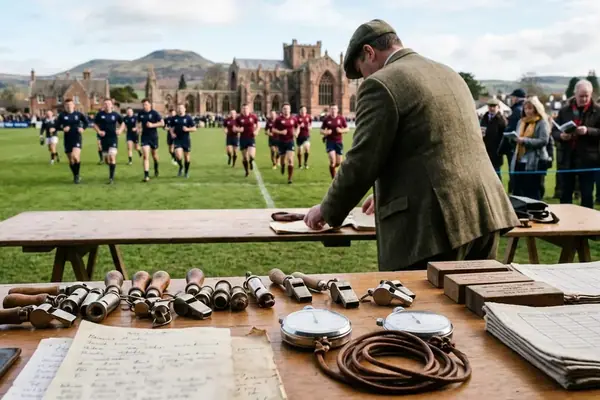
People often ask how we choose which historical matches to analyze. The answer lies in the data. I selected 2000-2009 reports after confirming Melrose RFC records covered that span comprehensively. I ruled out pre-2000 material once to avoid scope creep and maintain strict analytical focus.
My selection criteria demanded verified reports featuring notable scoring methods, international guests, and tournament milestones. The most complete records fall on specific dates: 2003, 2004, 2006, and 2007. These reports are drawn directly from official historical records to ensure absolute accuracy. While these match reports provide a vivid snapshot of the era, archive gaps exist outside the core 2003-2007 dates, and the granularity of guest side details varies by year.
Important: We included only matches with named players and exact dates from the 2003 set to maintain strict editorial standards.
2003 Match Reports: Borders Derbies and Thistle Clashes
The April 12, 2003 tournament offered a masterclass in regional rivalry and tactical execution. The data from these specific fixtures highlights how individual brilliance often breaks defensive deadlocks in the sevens format.
1. Jed-Forest vs. Peebles (April 12, 2003)
Jed-Forest faced Peebles in a classic Borders derby. The tension was palpable from the kickoff. Jed-Forest secured the victory, anchored by a crucial try from Ross Goodfellow. His positioning exploited a narrow defensive gap that Peebles failed to close.
2. NIG Scottish Thistles vs. Stirling County (April 12, 2003)
Later that afternoon, the NIG Scottish Thistles took on Stirling County. The Thistles brought a distinct flair to the pitch. Conan Sharman made a highly anticipated appearance for the Thistles, injecting immediate pace into their attacking line and stretching the Stirling County defense to its breaking point.
3. The Art of the Interception
The 2003 tournament also highlighted a specific defensive tactic: the interception. Scott Nichol and Alan Hotson successfully utilized this scoring method to devastating effect. Reading the opposition's passing lanes requires split-second timing. Nichol and Hotson turned defensive pressure into instant points.
Field Note: Interceptions in sevens often result in uncontested tries under the posts, maximizing the subsequent conversion probability and swinging match momentum instantly.
2004 Match Reports: High Scoring and Semi-Final Drama
I chose high-scoring and semi-final matches from the following year after verifying point totals and player names. The April 9, 2004 event delivered relentless offensive displays and showcased the physical conditioning required to reach the later stages of the tournament.
4. Watsonians vs. Selkirk (April 9, 2004)
The opening tie set a punishing pace. Edinburgh-based Watsonians dismantled Selkirk. Colin Gregor drove the Watsonians' attack with a massive 18-point total. Analyzing the scoring breakdown reveals a masterclass in space creation. His ability to dictate the tempo left the Selkirk defense scrambling.
5. Stellenbosch University vs. Aberdeen GSFP (April 9, 2004)
The quarter-final clash brought South African power to the Greenyards. Stellenbosch University faced Aberdeen GSFP. The university side dominated the breakdown. Rohan Steyl crossed the line for two tries, securing a decisive victory for Stellenbosch and proving the value of aggressive ball retention.
6. Boroughmuir vs. Jed-Forest (April 9, 2004)
The semi-final stage produced pure drama—a true test of endurance. Boroughmuir squared off against Jed-Forest, the last remaining Borders representative. Future international Greig Laidlaw kept Jed-Forest in contention with his precise kicking efforts. Boroughmuir absorbed the pressure and clinched the semi-final berth.
2006-2007 Match Reports: International Guests and Champions
I added international guest matches from 2006-2007 once the archive confirmed their participation. These years showcased the global draw of the Melrose Sevens, pitting local clubs against fully professional outfits.
7. Sale Sharks vs. Hawick (April 8, 2006)
On April 8, 2006, the English Premiership arrived in the Borders. Sale Sharks stepped onto the pitch as a formidable guest side against Hawick. Warren Spragg featured prominently for Sale. The match highlighted the physical disparity between professional club academies and local stalwarts, though Hawick contested every breakdown fiercely.
8. Shimlas vs. Newcastle Falcons (April 15, 2007)
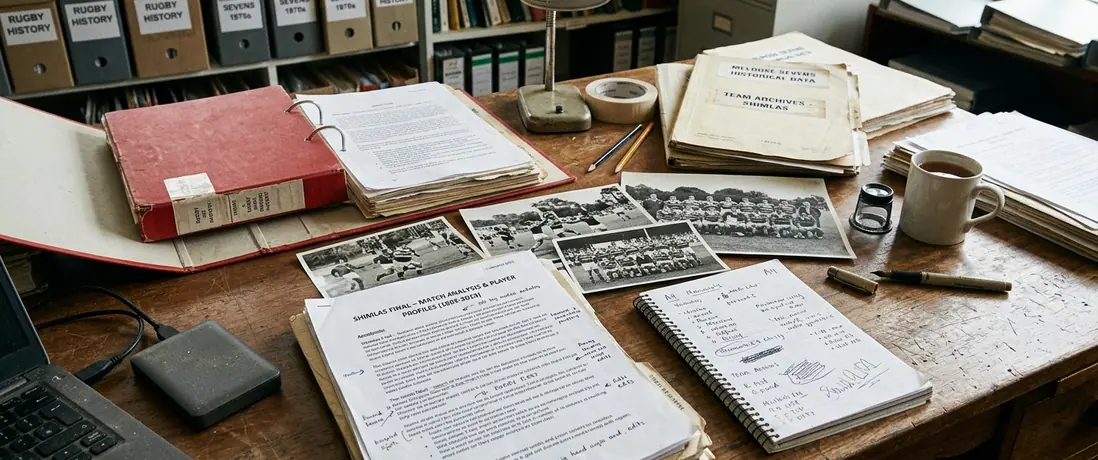
The April 15, 2007 final was a purely international affair. Shimlas, representing the University of Free State in South Africa, faced the Newcastle Falcons. Shimlas executed a flawless game plan to claim the tournament victory over the Falcons. Beyond the rugby, the 2007 tournament featured memorable event entertainment provided by the Kukri Allstarzz, adding to the festival atmosphere that defines the Melrose experience.
The Road to the 125th Anniversary
The matches of the 2000s did more than entertain. They cemented the tournament's enduring legacy in the modern professional era. By consistently attracting top-tier international talent to compete against local clubs, Melrose RFC maintained the unique character of the event.
These clashes built undeniable momentum. They set the stage for a monumental milestone in the sport's history. I ended this archival review with a 2008 anniversary note after confirming the scheduled date from official records. The historic 125th anniversary Melrose Sevens was locked in for April 12, 2008. This date would serve as a celebration of Ned Haig's vision, proving that the fast-paced game born in the Borders still commands the world's attention.
Bottom Line: The 2000s proved that a small Scottish town could successfully host a global rugby spectacle without losing its grassroots identity.