When Did Your Club First Step Onto the Greenyards?
Exactly what year did your rugby club first receive an invitation to play at The Greenyards?
That question turns a half-remembered story into a concrete research target. A veteran supporter may recall that the club travelled to Melrose “before the war,” while an old photograph might suggest an even earlier appearance. Neither clue establishes a debut year. The task is to identify the first invitation, determine whether the team arrived, and verify that it took the field.
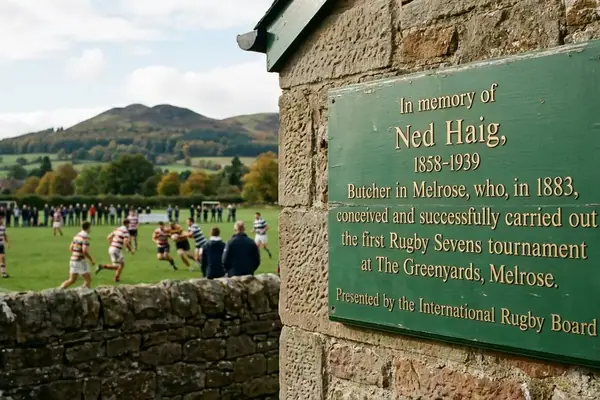
The distinction matters because the Melrose Sevens began with the inaugural tournament in 1883. Invitations subsequently carried prestige well beyond the Scottish Borders, especially as guest-club debuts outside the immediate Borders circuit gathered pace between 1887 and 1908. For players and supporters, recovering that first appearance restores a club’s place within the tournament history of the game Ned Haig created.
Records rarely make the answer effortless. Programmes disappear, minute books remain uncatalogued, and familiar club names may not match the names printed in nineteenth-century reports. Wartime suspensions deepen the confusion: no tournaments took place from 1915 to 1918 or from 1940 to 1945. Any account built on assumed continuous participation will therefore produce false sequences.
Important: Treat every remembered decade as a starting clue, not a settled date. Oral accounts gathered from members who joined after 1960 frequently compress pre-1939 appearances into the wrong decade.
A useful opening question follows the evidence rather than the legend: what is the earliest surviving source that places a named club, with identifiable players, in a match at The Greenyards?
Understanding the Landscape of Early Rugby Archives
Why a Digital Search Is Not Enough
Early rugby archives were assembled for immediate use, not for later historical research. A secretary recorded an invitation in a ledger. A printer prepared the event guide. An editor filed a match report under “Melrose Sports” rather than under the modern tournament name. These records now sit in different collections and answer different questions.
The central Melrose bound-programme run is extensive, covering most of the 52 tournaments staged between 1883 and 1939. Its gaps still matter. Digital catalogue descriptions can identify a volume, but they seldom reproduce handwritten marginalia, crossed-out entrants, or late ink corrections found in pre-1920 material. The physical page may therefore contain evidence absent from the catalogue record.
Official material also records intention more readily than participation. Between 1890 and 1910, provisional guest lists could change until roughly two days before the first whistle. Invitations were fluid, transport could interrupt a journey, and another side might replace a withdrawing team. This is a limitation of the surviving paperwork, not evidence of poor administration.
Build a Chain of Corroboration
The sound method separates three propositions:
- The club was invited. A programme, fixture list, or committee letter can establish this.
- The club attended. A contemporary newspaper report or dated photograph can support this.
- The club played. Match results and a named roster provide the strongest confirmation.
No single record should be forced to prove all three. Programme evidence establishes the baseline; newspaper coverage tests what happened on the Saturday; club records then confirm identity and context. That sequence is slower than accepting the first search result, but it produces a debut year that can withstand scrutiny.
Mining Match Programmes and Official Fixture Lists
Start with the Printed Entrant Line
Surviving official programmes provide the first structured account of competing teams. Begin with the tournament’s bound volumes, then check any club scrapbooks donated or compiled between 1950 and 1975. A pasted programme may preserve a cover, handwritten score, or correction missing from another copy.
For programmes printed from 1887 to 1913, inspect the reverse of the cover stock before searching the inner pages. The full entrant list was commonly placed there. Record the club name exactly as printed, including abbreviations, district references, punctuation, and terms such as “Former Pupils.” Modernising the name too early can conceal the trail that later newspaper searches need.
Read the Draw as a Working Document
An early fixture list should not be read as a final register. First identify the Borders clubs that appeared within the established local circuit. Then mark invited guest clubs whose presence may represent a first appearance. Compare the printed draw with handwritten amendments, score annotations, and the sequence of match results.
A club printed in the programme may still have failed to field a side. Documented withdrawals between 1901 and 1925 occurred after programmes had gone to press, so an entrant line proves planned participation rather than completed participation. A replacement written beside the original name is especially valuable because it explains why the printed club disappears from the reported results.
Field Note: Photograph the complete programme page, not only the club name. The adjacent tie, round heading, printer’s date, and handwritten score may be needed when two editions or corrected copies conflict.
Debut-Year Verification Sequence
- Pull the relevant Greenyards programme and transcribe the printed entrant line.
- Note every correction, substitution, score, and opponent attached to that entry.
- Locate the Monday newspaper match report and extract the seven named players where a roster appears.
- Match at least three player surnames against the club’s contemporary records.
- Record whether the evidence proves an invitation, attendance, or an actual match.
Searching the Scottish Borders Newspaper Archives
Ask the Newspaper What Happened
How can a researcher tell whether a printed entrant actually played? The regional newspaper report is usually the decisive source.
Scottish Borders titles carried continuous rugby columns from 1880 through 1939. For each candidate year, search the Monday edition published after the traditional April Saturday first, then widen the date range to the surrounding days. Contemporary reports often provide the draw, results, incidents, and player names that a programme cannot supply.
The British Newspaper Archive offers a practical route into these holdings, but modern terminology can return thin results. Search the language used by the period:
- “Melrose Sports”
- “seven-a-side” and “seven-a-sides”
- the historical club name or local moniker
- the printed opponent from the programme
- a distinctive player surname paired with “Melrose”
Search strings such as “Melrose Sports” and “seven-a-sides” commonly surface usable reports in the days immediately following the tournament. Optical character recognition can misread narrow columns and worn type, so a failed phrase search should lead to manual inspection of the sports page rather than abandonment of the year.
Use the Seven Players as an Identity Test
A named roster moves the inquiry beyond a shared or ambiguous club name. Transcribe each player exactly, then compare the surnames with contemporary minute books, team photographs, and other match reports from the same season. A recognisable group of club players offers firmer evidence than one familiar surname.
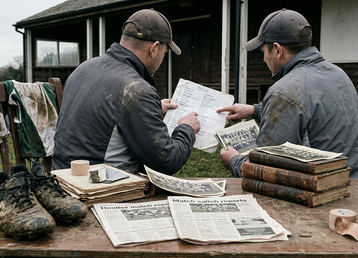
One catch applies to clubs that changed names or merged between 1900 and 1925: the researcher must construct a moniker cross-walk before accepting a newspaper hit. List each known name, abbreviation, district label, and predecessor club, then search them separately. A report filed under an earlier identity may represent the genuine debut of the present club, but that lineage must be demonstrated rather than assumed.
This stage often challenges cherished club lore. If a programme lists the club but the newspaper names a replacement side, the appearance cannot be counted. Pride in tournament history is best served by a date that survives contradiction.
Examining Your Own Club Minutes and Memorabilia
Follow the Travel Decision
Once a newspaper supplies a likely date, turn inward. Open committee minute books at the March and early-April meetings and look for approval of railway fares, accommodation, selection arrangements, or other Melrose travel expenses. Borders club minutes commonly recorded these approvals in the fortnight before the tournament from 1892 onward.
Such an entry explains how seriously the committee treated the invitation, but it does not prove that the journey or match occurred. Minutes capture institutional intent. The newspaper records the public event. Read together, they can show both the decision to attend and the outcome at The Greenyards.
Let Objects Narrow the Search
Player diaries, captioned team photographs, scrapbooks, and engraved presentation medals can resolve details that formal records omit. Clubhouse objects carrying dates from 1888 to 1930 deserve close inspection, particularly when a caption names Melrose or a medal inscription identifies the event.
Do not rely on a photograph’s later handwritten label without testing it. Compare faces and surnames with the seven players reported in the newspaper. Check whether the kit and club name correspond to the same organisational identity. A photograph may commemorate selection, travel, or a later reunion rather than the actual tournament side.
Oral history has a useful but disciplined role. Veteran members may remember who donated a medal, which family retained a diary, or where an old minute book was stored. Their account should direct the search toward an object, decade, or archive box. It should not become the final citation when contemporary evidence remains available.
Bottom Line: Use club memorabilia to explain and enrich a verified appearance, not to replace dated match evidence.
The One Archive You Must Prioritize First
Start with local contemporary newspaper reports, not with your club’s internal minutes.
This order may feel counterintuitive. Club minutes appear closer to the institution, and a travel-expense motion can look conclusive. Yet such a motion proves only that attendance was authorised. A programme likewise shows that the organisers expected a club to play. The date-stamped newspaper report records the matches that actually took place.
For tournaments held between 1883 and 1939, contemporary reports supplied results promptly after the final whistle. They can expose a late withdrawal, identify a substituted club, and name the seven players who represented the side. That combination bypasses the weakest elements of internal lore: remembered invitations, uncompleted journeys, and assumptions based on an old programme.
After the newspaper establishes participation, add the programme to confirm entry and the club archive to verify names, travel, and organisational lineage. Preserve the citation, page image, exact club wording, roster, opponent, and result as one evidence file. A hall of fame entry or anniversary event guide can then draw from a traceable record rather than a repeated anecdote.