Melrose rewards the visitor who looks up from the fixture list. The town is compact, but its historical range is unusually wide: a medieval abbey, the birthplace of rugby sevens, and a literary estate all sit close enough to shape one weekend rather than compete with it.
That is the useful way to approach the Scottish Borders during Melrose Sevens. Do not treat sightseeing as an add-on squeezed between matches. Treat the town as the setting that explains why the tournament feels different here.
What's Inside
- The Historic Heart of the Scottish Borders
- Our Criteria for Selecting Borders Attractions
- Top Attractions to Explore in Melrose
- Maximizing Your Melrose Sevens Weekend
The Historic Heart of the Scottish Borders
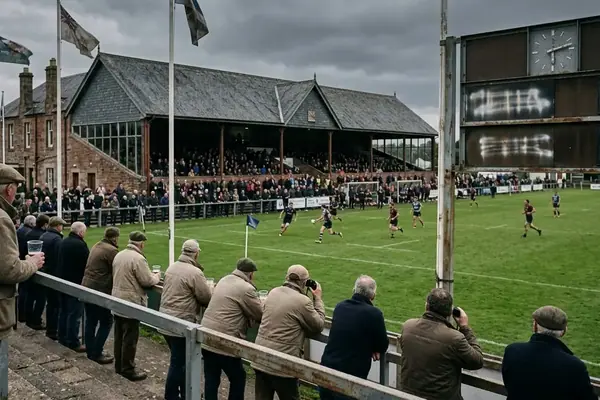
Anyone who has walked from the town centre toward The Greenyards on a spring tournament day knows the sequence: shopfronts filling, club colours moving in clusters, the abbey stone catching the light behind the streets. It is not a neutral backdrop. Melrose works because the rugby and the older town sit beside one another, not because one has been polished into a visitor attraction and the other left as sport.
The Scottish Borders has always made a virtue of crossings. Roads, rivers, religious houses, market towns, and sporting clubs have shaped a region where local identity is strong but never sealed off. Melrose sits in that pattern with unusual clarity. The abbey was founded in 1136, placing the town deep inside Scotland’s medieval ecclesiastical history. Rugby sevens was first played here in 1883, giving the same place a second inheritance that now reaches a global audience.
That dual-heritage frame matters for weekend planning. Visitors often arrive for the pace of the sevens, then discover that the surrounding town offers the slower work of looking, reading, and walking. The result is a rare kind of itinerary: morning stonework, afternoon rugby, evening Borders hospitality.
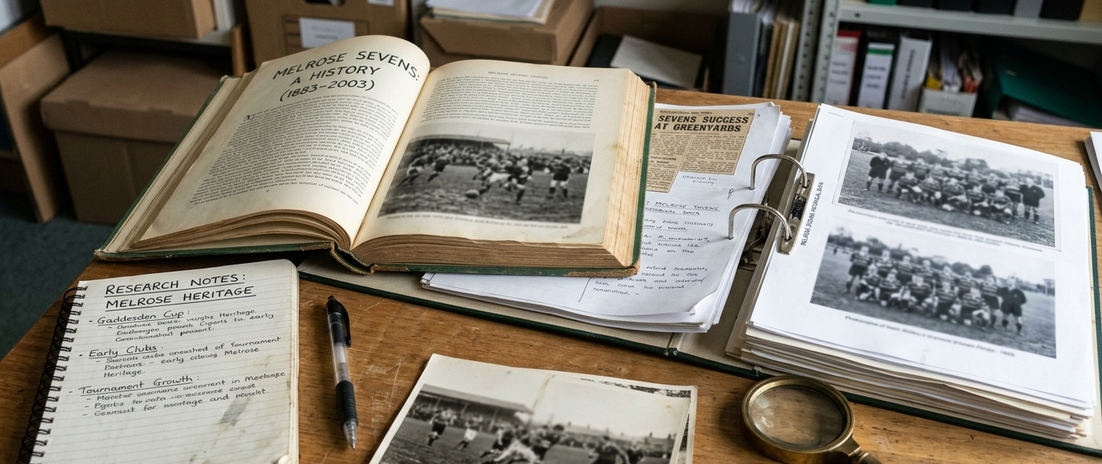
The practical advice is simple. Build the town into the weekend before the first whistle, not after the last one. The visitor who leaves all exploring until departure morning usually sees less and rushes more.
Field Note: The strongest Melrose weekends usually have one planned heritage stop, one flexible walk, and enough open time to let the tournament atmosphere do its work.
Our Criteria for Selecting Borders Attractions
What counts as near Melrose when a tournament schedule is involved?
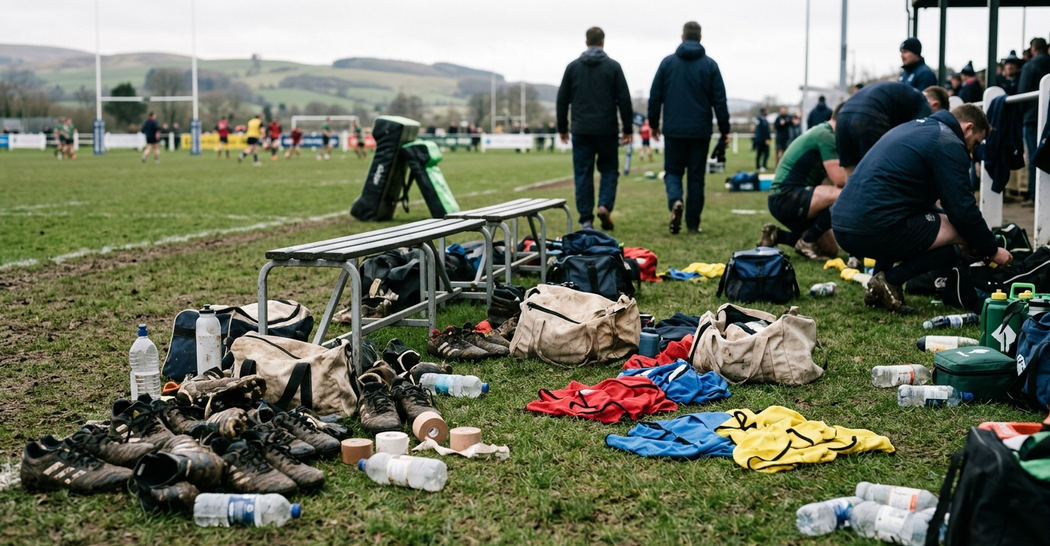
For this guide, the answer is deliberately narrow: attractions within a 10-mile radius of The Greenyards. The Borders region is much larger than this, and many worthwhile places sit beyond that circle. They are not included here because this article is built for a Melrose Sevens weekend, where time behaves differently. A short drive can become awkward when parking tightens, a leisurely visit can collide with a key match, and a beautiful detour can turn into a missed afternoon.
The selection method used three filters. First came historical significance, with priority given to places that help explain Melrose rather than simply sit near it. Second came accessibility for weekend visitors, especially sites reachable by foot or a short drive from The Greenyards. Third came connection to Borders culture across the long span from 1883 into the 2020s, because the modern tournament sits inside an older local landscape.
- Historical weight: sites with a clear role in religious, sporting, literary, or regional heritage.
- Weekend practicality: places that fit around match attendance without requiring a full day away.
- Local texture: attractions that feel rooted in Melrose and the Borders rather than interchangeable with any Scottish itinerary.
Visitor patterns suggest that short, local movements matter most during tournament weekends. That sounds obvious until a visitor tries to combine a late start, a long lunch, a distant attraction, and a crowded return to The Greenyards. The better plan is smaller and sharper.
The working list considered a wider set of historically meaningful sites, including Roman Borders material associated with Trimontium, where artifacts were excavated from 1905 to 1910. For this article, the final emphasis falls on three headline attractions because they give the clearest return within a compressed weekend. That is a curatorial choice, not a claim that the rest of the region lacks depth.
Important: This 10-mile approach works best for visitors based in or close to Melrose. It becomes less reliable for those staying outside town limits, and it can change when the tournament schedule shifts toward evening matches.
Top Attractions to Explore in Melrose
1. Melrose Abbey
Melrose Abbey is the obvious first stop, and in this case obvious is not a weakness. The 12th-century Cistercian ruin gives the town its oldest monumental centre, and its roofless stonework still carries enough scale to make visitors slow down. Even on a busy weekend, the abbey changes the rhythm of the day.
Its historical importance is not decorative. The abbey was founded in 1136, and the burial of Robert the Bruce’s heart is recorded in 1330. Those two facts place Melrose inside the national story without making the town feel like a museum case. The place remains walkable, visible, and close to ordinary town life.
For visitor information, opening arrangements, and conservation context, use Historic Environment Scotland's official Melrose Abbey guide before fixing your weekend plan.
A beginner can take the abbey at face value: a beautiful ruin, easy to reach, worth seeing. The more attentive visitor should look at how it positions Melrose as a town of layered memory. Its presence changes how The Greenyards feels because both sites rely on continuity, gathering, and public ritual.
2. The Greenyards
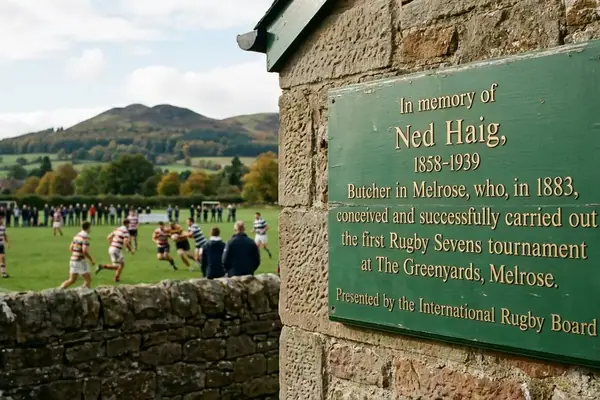
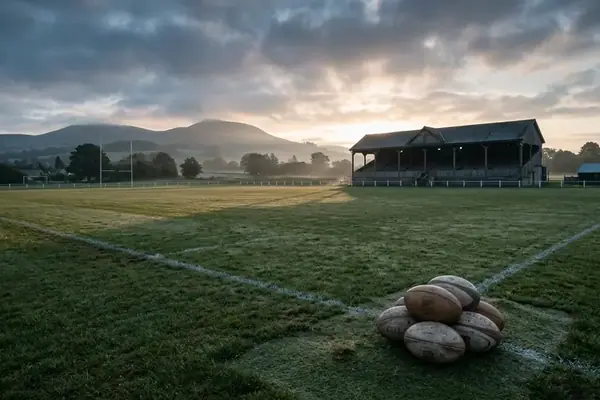
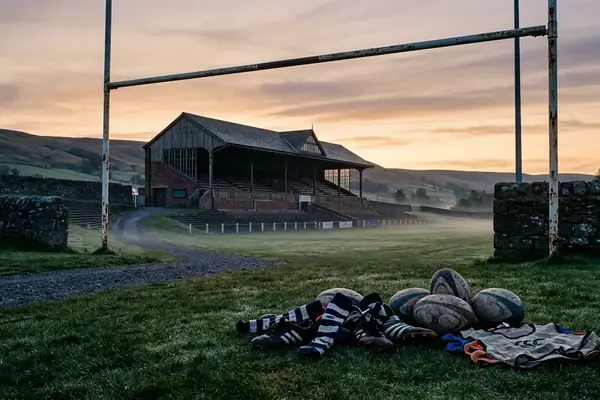
The Greenyards is not merely where the tournament happens. It is the source site of the short-form game that made Melrose famous far beyond the Borders.
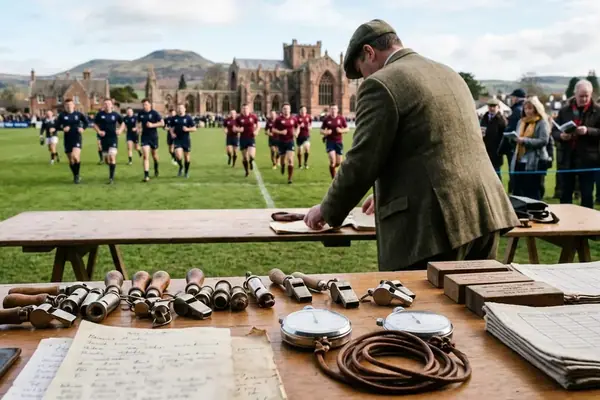
In 1883, Ned Haig and his fellow Melrose footballers needed a practical fundraising format. The solution was rugby sevens: fewer players, faster matches, a tournament structure that could hold attention across a day. That origin story has been repeated often, but it still matters because the place has not been detached from the invention. The Greenyards remains a working rugby ground, not a commemorative shell.
There is a useful discipline in walking the ground with both histories in mind. On one level, visitors see tents, touchlines, club colours, and the bright pressure of short matches. On another, they stand inside a sporting experiment that began in the late Victorian Borders and now belongs to the wider rugby world.
This is where Melrose’s heritage argument becomes strongest. The town does not simply claim sevens as a brand. It hosts the game where the format first took practical shape.
Bottom Line: If time is tight, pair The Greenyards with Melrose Abbey. Together they explain the town’s sporting and medieval authority better than any longer itinerary.
3. Abbotsford House
Abbotsford House extends the weekend beyond Melrose without pulling it out of the Borders. The estate of Sir Walter Scott offers a different register of heritage: 19th-century architecture, literary collecting, designed interiors, and the cultural imagination that helped shape how Scotland was read and represented.
For sevens visitors, Abbotsford works well as the considered short drive. It gives space after the density of the town centre and a broader sense of the region’s literary history. The house also suits mixed groups, especially when not everyone wants every spare hour at the touchline.
The advanced tip is to treat Abbotsford as a contrast, not a rival, to the rugby weekend. Melrose gives the intensity of sport and the intimacy of a small town under pressure. Abbotsford gives the more deliberate pace of an estate landscape and a writer’s constructed world. Read together, they make the Borders feel less like a scenic setting and more like a region with several kinds of memory operating at once.
Maximizing Your Melrose Sevens Weekend
The mistake is trying to see everything. The better method is to protect the tournament experience while giving the town enough attention to reveal itself.
Start with the fixed points: match times, meal bookings, accommodation location, and the attraction most important to your group. Then build short movements around those anchors. Walking routes between the town centre and the abbey can be under 15 minutes, which makes Melrose Abbey the easiest heritage visit to place before or after a session at The Greenyards. Abbotsford needs more deliberate timing because it sits outside the immediate town rhythm.
- Use the morning well. The peak visiting window runs roughly from mid-morning to late afternoon, so an early start keeps the day from bunching around the busiest hours.
- Keep one attraction close. Choose Melrose Abbey if your schedule is uncertain or if you are moving with a larger group.
- Plan transport before arrival. Short drives are still affected by tournament traffic, parking pressure, and changing crowd patterns.
- Leave buffer time before key matches. The atmosphere around The Greenyards is part of the event; arriving at the last minute wastes it.
- Match the visit to the group. Rugby-focused visitors may prefer The Greenyards and the abbey. Mixed groups often appreciate adding Abbotsford for variety.
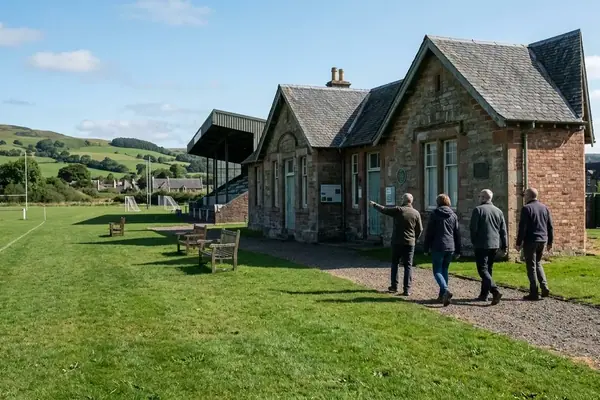
Local footpaths are part of the pleasure, not just the logistics. The compact walk between the town centre, the abbey, and the rugby ground helps visitors understand why Melrose carries a distinctive tournament atmosphere. Movement is visible. People do not disappear into a transport system; they pass through the town, meet again, stop, talk, and rejoin the crowd.
Peak times need a little respect. Between late morning and mid-afternoon, visitor pressure can rise around food, access points, and the most obvious walking routes. That does not mean avoiding the town. It means choosing whether you want quiet looking or public atmosphere, then planning accordingly.
For many visitors, the most satisfying version of the weekend is not the fullest itinerary. It is the one that leaves enough energy for the final matches, enough curiosity for the abbey stones, and enough appetite for the hospitality that has always made Melrose more than a venue. Within the narrow weekend radius used here, that balance is the real attraction.
Come for the sevens, certainly. But give Melrose the courtesy of being more than the pitch, and the weekend becomes richer: a celebration of rugby invention, Borders history, and a town that still knows how to welcome the world.