What's Inside
- The Legacy of 1883: Why The Greenyards Matters
- Anatomy of the Ground: Pitch, Stands, and Surroundings
- Timing Your Visit: Tournament Day vs. The Off-Season
- Getting to Melrose: Practical Travel and Access Logistics
- Beyond the Pitch: Local Amenities and Rugby Heritage
- Visitor Scope and Venue Limitations
The Legacy of 1883: Why The Greenyards Matters
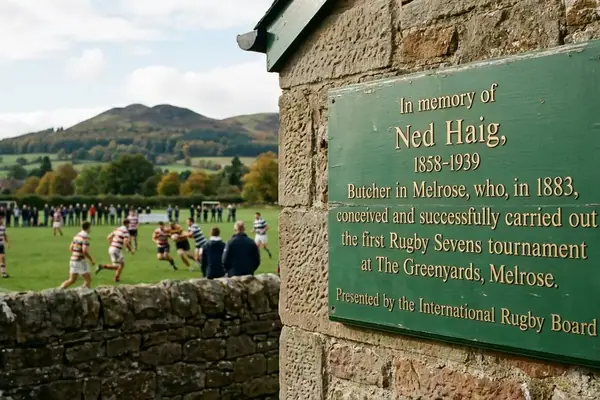
Most visitors arrive at The Greenyards knowing it as the birthplace of rugby sevens. The foundational narrative centers on Ned Haig and the 1883 invention of the seven-a-side game. Understanding this origin requires looking past modern tournament spectacle to the harsh economic realities of nineteenth-century amateur sport.
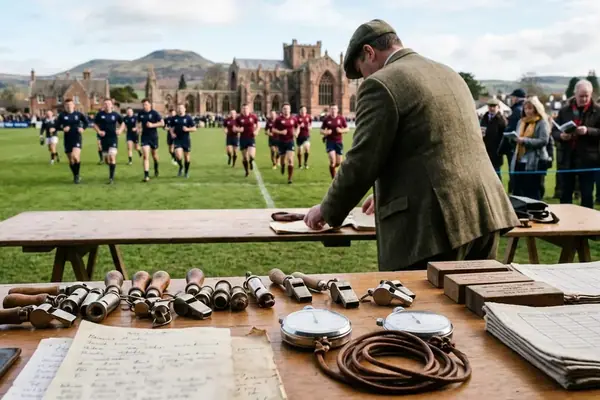
Archival methodology dictates that researchers prioritize primary club records for the 1883 invention details over later published accounts. The minute books themselves present a physical challenge. Faded ink and fragile bindings mean that extracting the exact sequence of events requires specialized handling. These primary documents reveal a pragmatic solution to a severe financial deficit, not a grand vision for a global sporting revolution. The club needed funds. A standard fifteen-a-side tournament proved logistically impossible to complete in a single afternoon. Haig’s proposal to reduce team sizes and match durations solved a mathematical problem of daylight and scheduling. The historical data confirms that the invention occurred to raise club funds via shortened matches, a direct response to a looming debt.
The transition to recognized pilgrimage status spanned the late 1880s through the early 1900s. The specific geography of Melrose, nestled deeply in the Scottish Borders, isolated the early tournaments. This geographic containment fostered a distinct local culture and allowed the rules of the shortened game to solidify before the format exported globally.
Field Note: When examining the World Rugby Hall of Fame induction for Melrose and Ned Haig, cross-reference the citation with the original club minute books for the most accurate historical timeline.
Anatomy of the Ground: Pitch, Stands, and Surroundings
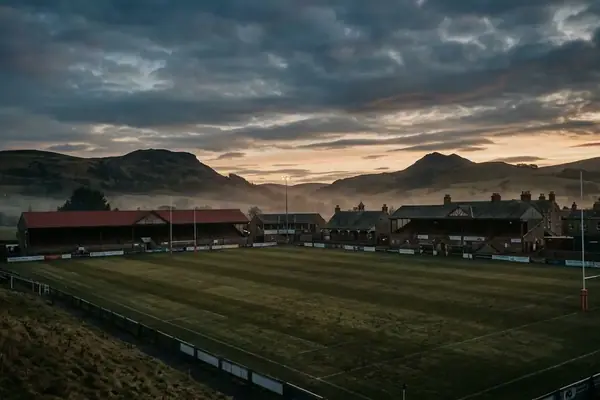
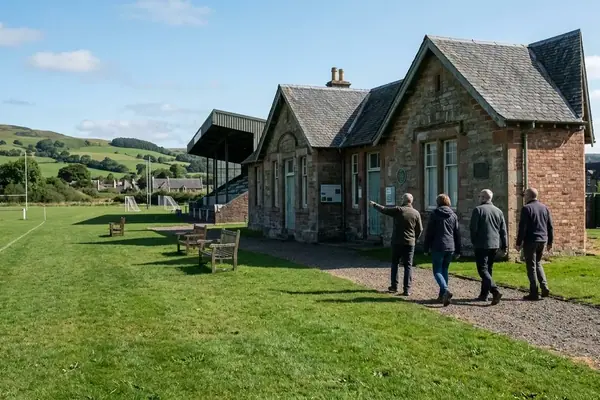
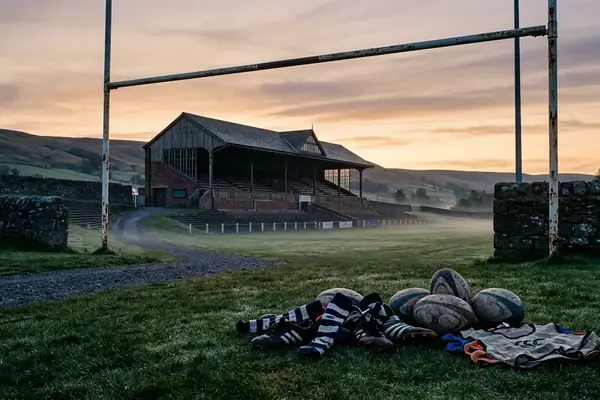
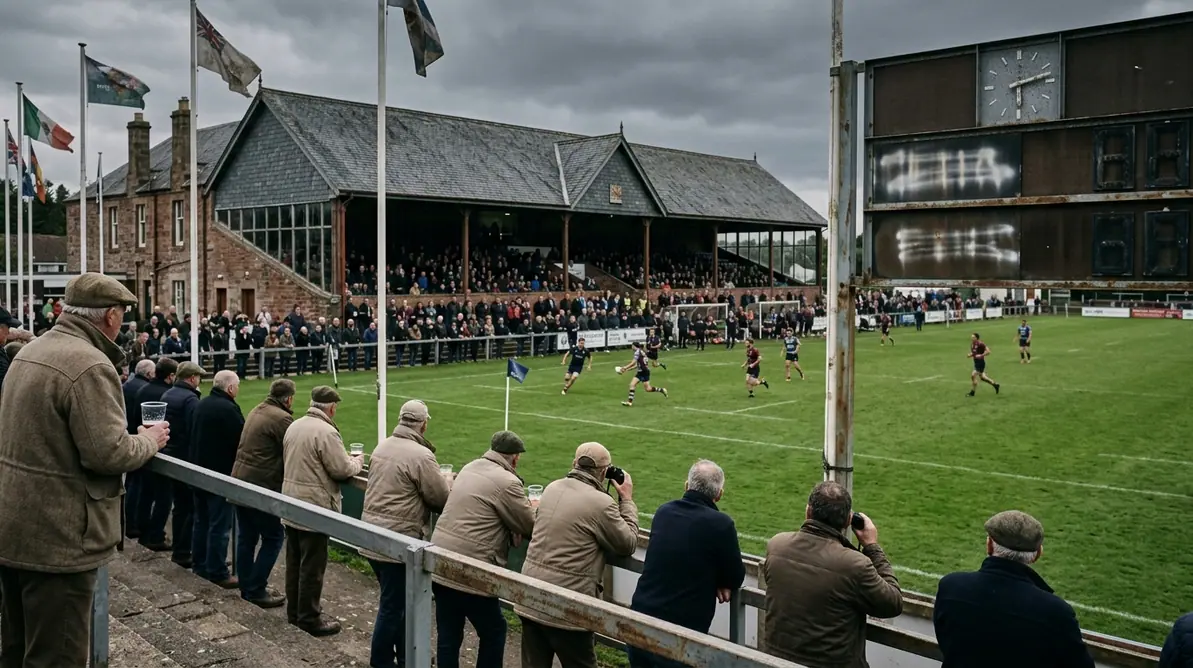
A frequent inquiry from first-time visitors concerns the physical orientation of the ground. The Greenyards features a traditional layout dominated by the main stand and surrounding earthen terracing. This configuration directs spectator focus inward while allowing the iconic backdrop of the Eildon Hills to frame the southern skyline.
The hills shape the venue's unique atmosphere. They provide a natural amphitheater effect that traps crowd noise during matches, altering the acoustic dynamics of the playing enclosure. The pitch dimensions subtly influence the tactical execution of the game. Unlike expansive modern stadiums, the proximity of the crowd to the touchline creates a claustrophobic pressure for defending teams.
Historical Markers and Infrastructure
Perimeter analysis reveals specific historical markers integrated directly into the facility's infrastructure. Monuments dedicated to the founders sit strategically near the primary access points. A multi-year heritage documentation project initiated around 2018 ensures the preservation of these physical markers. These installations serve as physical anchors to the 1883 legacy, demanding attention before spectators even reach the pitch. The architectural simplicity of the terracing intentionally defers to the natural topography.
Timing Your Visit: Tournament Day vs. The Off-Season
Archival researchers often recount the stark contrast between the ground in April and the ground in November. The annual Melrose Sevens event generates a high-energy, festival atmosphere. Crowd sizes swell dramatically, necessitating strict ticketing requirements and controlled access protocols throughout the weekend.
Participant reviews reveal that the sensory overload of the tournament weekend leaves little room for quiet reflection. The smell of local catering, the constant roar of the crowd, and the rapid turnover of matches obscure the ground's permanent character. This environment offers a visceral understanding of the tournament's modern scale and commercial reality.
Conversely, the off-season presents a quiet reverence. Long-term tracking demonstrates that visiting during quieter months yields significant benefits for historical research and uninterrupted photography. The absence of temporary infrastructure allows for a clear examination of the permanent ground features—a necessity for accurate spatial analysis. Researchers can walk the perimeter without obstruction, tracing the exact sightlines experienced by spectators a century ago.
Important: Off-season visits require advance coordination with club officials to ensure access to the main stand and memorial areas.
Getting to Melrose: Practical Travel and Access Logistics
Efficient transit to the Scottish Borders relies heavily on the Borders Railway connection from Edinburgh to Tweedbank. This route reinstates a historical travel corridor utilized by early tournament spectators, re-establishing the vital link between the capital and the rural rugby heartland. The railway operates on a high-frequency schedule during the tournament weekend, but off-season travelers must align their itineraries with standard commuter timetables.
Upon arrival at Tweedbank, visitors face a choice between local bus connections and a structured walking route. The pedestrian approach offers a gradual introduction to the town's geography. Walking from the terminus takes roughly half an hour. It guides visitors along the River Tweed, offering glimpses of the surrounding topography that dictated the town's original settlement.
Vehicle Access and Parking
Drivers must implement specific parking strategies. The town's medieval street pattern severely restricts vehicle capacity. Limited availability during peak events forces reliance on designated overflow fields on the settlement's periphery. Street parking near the ground vanishes hours before kickoff.
Beyond the Pitch: Local Amenities and Rugby Heritage
The rugby heritage extends far beyond the physical boundaries of The Greenyards. Nearby establishments actively embrace the town's sporting history. Historic pubs and local eateries display archival photographs, vintage jerseys, and match programs.
These locations function as secondary repositories of club history. They offer a more informal, narrative-driven interpretation of the town's legacy compared to the official archives. Forum feedback confirms that engaging with local business owners often yields unrecorded oral histories regarding past tournaments.
Complementary historical sites provide broader context. Melrose Abbey stands as a critical architectural counterpoint to the rugby ground. Visiting the Abbey illustrates the deep historical strata of the settlement. The monastic history of the area established the early agricultural wealth that eventually supported the leisure time necessary for organized sports. Official merchandise and authenticated local rugby memorabilia remain concentrated in dedicated retail spaces near the town square.
Visitor Scope and Venue Limitations
The Greenyards operates as a historic, community-focused ground. It inherently lacks some ultra-modern stadium amenities found in purpose-built international venues. Visitors must navigate uneven terracing. The terracing, composed of compacted earth and reinforced grass, becomes particularly treacherous during heavy rainfall. Visitors must prioritize appropriate footwear over aesthetic choices.
You must prepare for exposure to unpredictable Scottish weather. The primary viewing areas offer limited protection from rain and wind, a reality that shapes the endurance required of traditional spectators. Accessibility requires careful planning. The historical footprint limits structural modifications, meaning wheelchair access and mobility support require specific routing through the grounds.
Off-season facility access, including clubhouse hours and guided tour availability, fluctuates based on volunteer availability. Evaluating the complete historical footprint relies on local archive access which may be restricted, and the depth of the site's interpretation varies by whether the visitor has prior rugby historical knowledge.
Bottom Line: Approach The Greenyards not as a modern entertainment complex, but as an active, functioning piece of sporting heritage that demands preparation and respect for its physical limitations.