Ally Warnock and the Legends Who Lit Up The Greenyards
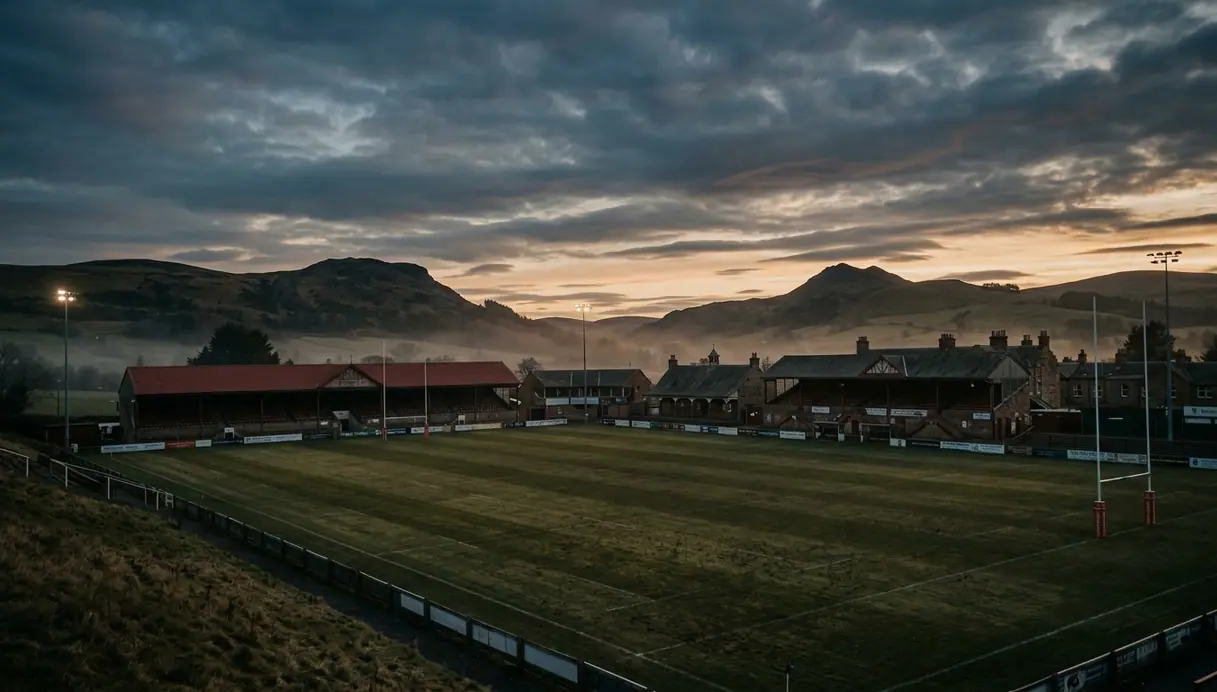
Melrose has never needed to borrow drama from anywhere else. The Greenyards carries its own charge: the birthplace of rugby sevens in 1883, a town ground with a world game folded into its grass, and a memory long enough to make every home victory feel like part of a family argument finally settled.
This is not just a list of famous names. It is a walk through the moments when local boys, post-war forwards, tactical thinkers, youth coaches, and international masters all helped turn Melrose Sevens into a living inheritance.
What's Inside
The Spiritual Home of Sevens and a Thirst for Victory
Breaking the Drought: The Triumphs of 1947 and 1948
The 'Seven Half-Backs' and the 1950s Golden Age
When Global Superstars Grace the Borders
The Spiritual Home of Sevens and a Thirst for Victory
Where the story properly starts
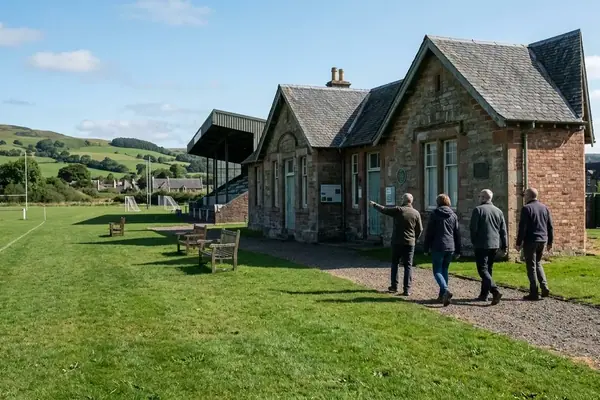
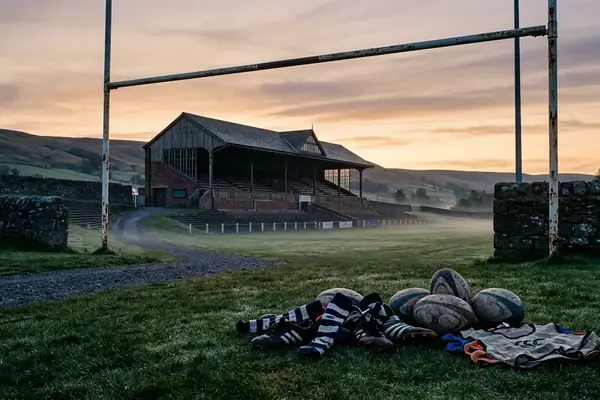
I always start a Greenyards story with the ground itself, because at Melrose the setting is never background decoration. It is the point. Rugby sevens began here in 1883, and that origin still shapes how the tournament is watched, discussed, and remembered.
Visitors often arrive expecting a picturesque Borders event and quickly find something more serious beneath the spring colour. The game invented by Ned Haig did not remain a local curiosity. It travelled. Yet the local standard for belonging stayed stubbornly high: to shine at the Greenyards, you had to understand its pace, its crowd, and its appetite for bold rugby.
The boys' route into a senior legend
The Crichton Cup matters because it keeps the Melrose story from becoming only a senior roll call. As a boys' tournament, it nurtured homegrown talent before those players were old enough to be spoken about as legends. That kind of pathway is easy to overlook when people jump straight to finals and trophies.
For a young player, the lesson was plain: sevens rewards nerve early. You touch the ball often. You defend in space. You cannot hide in a crowd.
Field Note: When reading older Melrose Sevens records, look for the youth competitions as carefully as the senior finals. They often explain why a dominant side looked so composed years later.
The post-war years sharpened that hunger. Melrose had not won its own tournament since 1931, and by the time rugby life found its rhythm again after the war, that gap had become more than an awkward statistic. It was a local thirst. Supporters did not need anyone to explain the drought to them; they had lived with it every April.
Breaking the Drought: The Triumphs of 1947 and 1948
Why 1947 still feels heavier than a normal win
The obvious question is simple: why does the 1947 title carry such weight?
Because it ended 16 years of waiting. Melrose won its first home tournament since 1931, and the victory did not arrive in neat, comfortable fashion. The final against Stewarts College F.P. needed extra time, the sort of finish that drains players and fixes itself in local memory.
That detail matters. A straightforward win can become a result. An extra-time win becomes a story people keep retelling.
Adam Crawford and the work that decides sevens
Adam Crawford's role in that 1947 side deserves careful attention. He was a key forward in a match that asked for more than open-field glamour. In sevens, forwards do not get the luxury of being specialists in the old narrow sense; they must win contact, support breaks, restart quickly, and still have enough breath to make decisions late on.
Crawford helped give Melrose the platform it needed. Not the kind of platform that looks ornamental in a team photograph, but the practical one: ball secured, pressure absorbed, one more phase available when legs were fading.
Melrose had the burden of expectation at home.
Stewarts College F.P. forced the final beyond ordinary time.
The forwards had to keep the match alive long enough for skill to matter.
The win reset the emotional temperature of the tournament.
The following year confirmed that 1947 was not a sentimental accident. Melrose secured the championship again in 1948, turning release into momentum. One title ended the drought; the next made the revival credible.
Bottom Line: The 1947 and 1948 triumphs should be read together: first as relief, then as proof that Melrose had rebuilt a side capable of carrying the ground's expectations.
The 'Seven Half-Backs' and the 1950s Golden Age
A beginner's way to understand the tactic
If you are new to sevens history, the phrase 'seven half-backs' can sound like a clever slogan. It was more demanding than that. The idea asked every player to think, pass, handle, and react like a half-back, not simply wait for a specialist to organise the game.
That philosophy fitted the 1950s golden age because it matched the rhythm of sevens itself. The format punishes delay. A player who hesitates for a second can turn an overlap into a tackle, or a tackle into a lost chance.
From local method to sustained dominance
The progression is worth tracing. First comes basic competence: catch cleanly, pass accurately, defend space. Then comes shared decision-making, where every player understands when to shift the ball and when to straighten the line. The advanced version is almost musical, with forwards and backs reading the same cue before the crowd sees it.
J. L. 'Les' Allan sits at the centre of that story because his influence crossed roles. He had been a formidable Melrose player, and after his playing career he served as a respected South selector. That combination matters. A former player who can also identify talent helps a rugby culture keep its standards honest.
Frank Laidlaw's youth coaching gave the era another essential layer. Senior dominance rarely appears from nowhere. It is usually prepared in smaller games, quieter sessions, and patient correction long before a final is played. Laidlaw's work with young players helped sustain the habits that a 'seven half-backs' style requires.
Important: Do not reduce the 1950s Melrose sides to tactics alone. The system worked because the club had players and coaches capable of teaching it, trusting it, and repeating it under pressure.
There is a useful lesson here for anyone applying the 1950s half-backs model to current sevens squads. The phrase is not a shortcut. It is a training demand. If every player is expected to think like a playmaker, every player has to be given the technical work and decision-making responsibility to earn that freedom.
When Global Superstars Grace the Borders
From homegrown heroes to international royalty
Melrose Sevens can celebrate its local heroes without becoming parochial. In fact, the local foundation is what gives the tournament its international pull. The world's oldest sevens tournament attracts famous visitors because it offers something rare: a global game returning to its source.
That is why appearances by international greats never feel like celebrity decoration at the Greenyards. They feel like recognition. The visitor steps into a history that was already there.
Waisale Serevi and the sevens imagination
Waisale Serevi's 2009 appearance for the Leeds University representative side remains one of those details that makes people pause. Serevi was not just another gifted international. He was one of the defining figures of the sevens format, a player whose name still carries an immediate charge for anyone who has watched the game seriously.
His connection to sevens runs deep, and his honorary sports doctorate status reflects a career understood beyond ordinary match summaries. At Melrose, that kind of presence links two scales of rugby memory: the local ground and the worldwide stage.
There is a temptation to assume every international visitor shares Serevi-level engagement with the tournament's heritage. That would be too easy. Some arrive as competitors, some as guests, some as names passing through a famous weekend. Serevi stands apart because the format itself is central to his rugby identity.
The wider trophy lineage also points back to Melrose. Fiji's 1997 victory in the Melrose Cup belongs to the global sevens record, while the cup's name keeps the Borders origin in view. With a limited record trail around some visiting squad details, that lineage is best traced through named tournaments, named players, and moments that can still be placed clearly in the sport's memory.
That is the enduring charm of Melrose Sevens. It can hold Adam Crawford in extra time, Les Allan as player and selector, Frank Laidlaw's youth coaching, and Waisale Serevi's 2009 visit without forcing them into the same kind of legend. Each lit up the Greenyards differently.