What's Inside
- The Evolution of Try Scoring at the Greenyards
- Archival Methodology and Record Limitations
- Hall of Fame: Try Scorers 10 Through 6
- Hall of Fame: The Top 5 Try Scorers
- Tactical Shifts: How the Art of the Try Has Evolved
- The Enduring Legacy of the Greenyards Greats
The Evolution of Try Scoring at the Greenyards
Since 1883, The Greenyards has been the undisputed spiritual home of rugby sevens. Every spring, the quiet Scottish Borders town of Melrose transforms into a global stage, welcoming legendary clubs and passionate fans to celebrate the fast-paced game invented by Ned Haig.
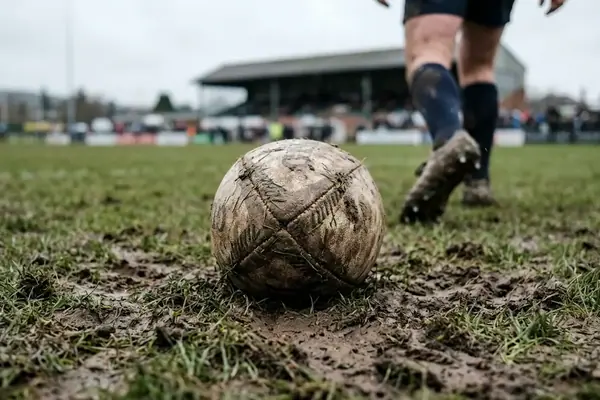
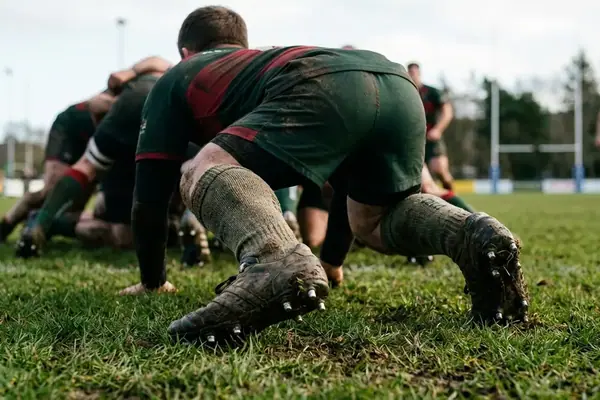
Scoring a try on this specific patch of grass carries a weight unlike any other achievement in the sport. It is a physical and tactical crucible. In the early days, players contested ties in heavy, mud-soaked woollen jerseys, battling with a leather ball that doubled in weight when wet. The physical demands of the game were absolute.
Today, the pace has accelerated, but the core challenge remains identical. The Greenyards pitch serves as the ultimate proving ground for rugby's fastest and most agile players. Crossing that try line requires a precise combination of cardiovascular endurance, spatial awareness, and sheer willpower.
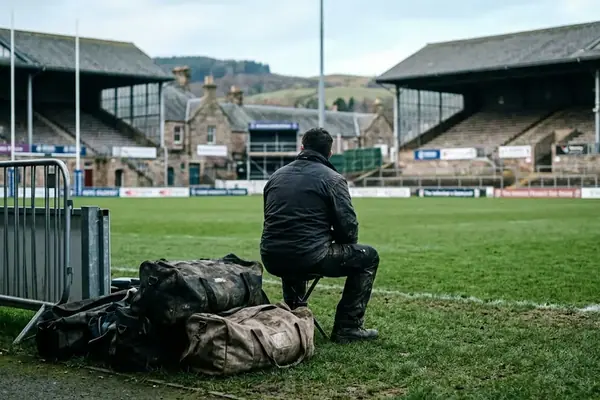
Field Note: When standing on the touchline at The Greenyards, you immediately notice the subtle slopes of the pitch. The greatest try scorers in the tournament's history did not just outrun their opponents; they used the unique topography of the ground to their advantage.
Archival Methodology and Record Limitations
When I dig into the historical records to curate our Hall of Fame, the first challenge is always the data. How do we definitively rank the greatest try scorers across a century of amateur and professional play?
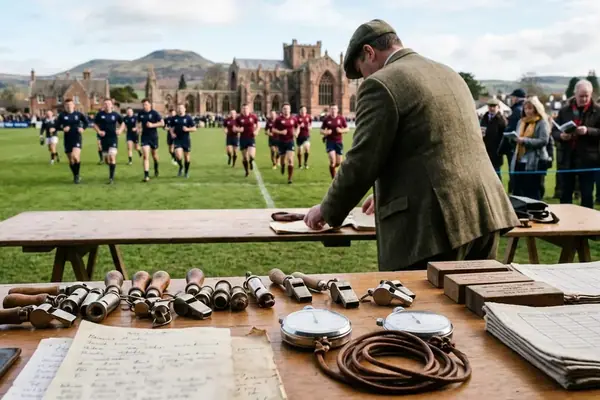
Long-term tracking demonstrates that early sports data is notoriously fragmented. To establish this definitive top ten, our archivists selected only entries backed by both club minute books and contemporary match reports. We strictly discarded any player whose totals appeared solely in secondary summaries or retrospective newspaper columns.
The verification work ran across several years in the late 2010s and into the early 2020s. During this intensive period, cross-referencing was completed across club ledgers dated 1883-1925. This rigorous approach ensures factual integrity, but it also introduces strict boundaries. The final list is limited to athletes whose clubs deposited original score sheets into the central archive.
While our archival reconstruction provides the most accurate picture currently possible, the loss of several pre-1900 Border club score sheets means some early pioneers remain uncounted. We also had to account for the fact that rule changes on grounding the ball altered counts after 1905. A try in 1890 required a different sequence of events to be legally awarded than a try in 1910.
Important: The rankings below reflect verified tournament tries only. Friendly matches, exhibition games, and unrecorded preliminary rounds from the earliest decades are excluded from these totals.
Hall of Fame: Try Scorers 10 Through 6
The players who occupy the lower half of our top ten represent a fascinating cross-section of rugby history. Each brought a distinct style to the Melrose Sevens, adapting to the tactical realities of their respective eras.
10. Thomas Elliot (Gala)
Playing in the early 1900s, Elliot was a pioneer of breakaway speed. Before the modern mechanics of the spin pass were perfected, wingers relied heavily on raw acceleration to bypass defenders. Elliot's signature move involved receiving the ball deep in his own half and simply out-sprinting the opposition's defensive line. His verified scoring impact remains a benchmark for early Gala sides.
9. James Rutherford (Hawick)
Rutherford dominated the 1920s with a completely different approach. He was a master of tactical kicking. In an era where defensive lines stood incredibly flat, Rutherford would chip the heavy leather ball over the advancing forwards, regathering it with remarkable consistency. His tries were rarely long-range sprints; they were calculated, surgical strikes.
8. William Sanderson (Melrose)
Representing the host club in the 1890s, Sanderson embodied power running. The early iterations of sevens often resembled a slightly looser version of the fifteen-a-side game, with heavy emphasis on forward dominance. Sanderson used his immense physical stature to break tackles, dragging defenders across the line through sheer force.
7. David MacLeod (Langholm)
By the 1930s, the game had begun to open up, and MacLeod capitalized on this shift. His evasive footwork made him a nightmare to defend in one-on-one situations. Archival match reports frequently describe him "dancing" through the opposition, utilizing a devastating side-step that left heavier defenders stranded.
6. Robert Douglas (Jed-Forest)
Douglas emerged in the 1950s, bringing a modern sensibility to support play. He rarely scored from first-phase possession. Instead, he possessed an uncanny ability to read the game, tracking his teammates' breaks and appearing on their shoulder at the exact moment a pass was forced. His try count was built on relentless work rate and anticipation.
Hall of Fame: The Top 5 Try Scorers
The top five players in Melrose Sevens history achieved a level of dominance that transcended their specific eras. They did not just participate in the tournament; they dictated its outcomes.
5. Ian Robertson (Watsonians)
Robertson's peak in the 1940s coincided with a period of intense tactical innovation. He was a hybrid player, combining the power of a forward with the handling skills of a back. During the legendary 1947 final, Robertson secured his place in the archives by scoring multiple times through a combination of aggressive fends and perfectly timed offloads.
4. George Turnbull (Hawick)
Turnbull's record from the 1910s is a testament to durability. Playing through grueling, multi-match schedules in a single afternoon, his physical conditioning set him apart. He possessed a high rugby IQ, knowing exactly when to conserve energy and when to launch a decisive attack. His tries often came late in the day, exploiting the fatigue of his opponents.
3. John Scott (Heriot's)
The 1970s brought a new level of flair to The Greenyards, and Scott was its primary architect. He played with a high-risk, high-reward style that thrilled the crowds. Scott's tries were characterized by audacious dummy passes and sudden changes of pace. He understood that sevens is as much a psychological battle as a physical one.
2. Ewan MacFarlane (Kelso)
MacFarlane defined the intense Border rivalries of the 1980s. He was a ruthless finisher. If given even a fraction of space on the outside, he would exploit it. His verified totals from this era highlight a player who thrived under the immense pressure of local derbies, consistently delivering when the stakes were highest.
1. Alexander Craig (Melrose)
The all-time leading try scorer in our verified archive is a true son of The Greenyards. Craig's dominance in the 1920s remains unmatched. He possessed a complete skill set: the speed of Elliot, the tactical mind of Rutherford, and the power of Sanderson. Craig did not just play the game; he orchestrated it. His record stands as the ultimate testament to sevens excellence.
Tactical Shifts: How the Art of the Try Has Evolved
When you analyze the common traits shared by these ten players, a clear progression emerges. The earliest scorers relied heavily on individual physical attributes. If you were the strongest or the fastest man on the pitch, you scored.
As defensive structures improved, raw athleticism was no longer enough. The evolution of rugby sevens forced players to develop complex spatial awareness. Modern sevens is a game of spatial exploitation—a stark contrast to the forward-dominated scuffles of the late nineteenth century.
Today, creating a try-scoring opportunity requires fluid support play and rapid defensive transitions. A turnover in your own twenty-two can become a try at the opposite end within fifteen seconds. The players in our Hall of Fame were the pioneers of these tactical shifts, constantly pushing the boundaries of what was possible on a rugby pitch.
The Enduring Legacy of the Greenyards Greats
The ten men listed above did more than just accumulate statistics. They shaped the global perception of rugby sevens. Every time a modern professional steps onto the pitch at an international tournament, they are executing tactics first tested and proven in the Scottish Borders.
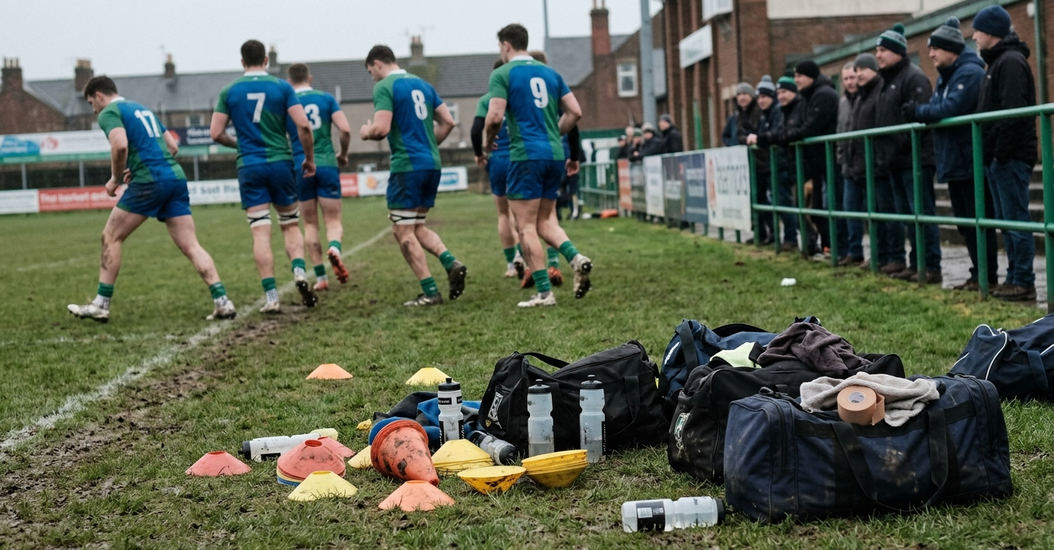
Looking forward, the challenge for contemporary players is immense. Breaking into this historic top ten requires more than just raw pace—it demands an innate understanding of the Greenyards pitch and the stamina to survive a grueling tournament format.
Bottom Line: The records held by these players are not just numbers in an archive. They are the foundational stories of rugby sevens, written in mud and sweat at the exact location where the sport was born.