The Logistical Stakes of the One-Day Tournament
Failing to understand the strict logistical constraints of the 1880s means missing exactly why the sevens format survived while other variations failed. Without floodlights or multi-day budgets, organizers faced a strict countdown against the setting sun to complete a profitable tournament. The original rules were engineered as a precise solution—a mathematical necessity, to the problem of hosting multiple teams in a single afternoon.
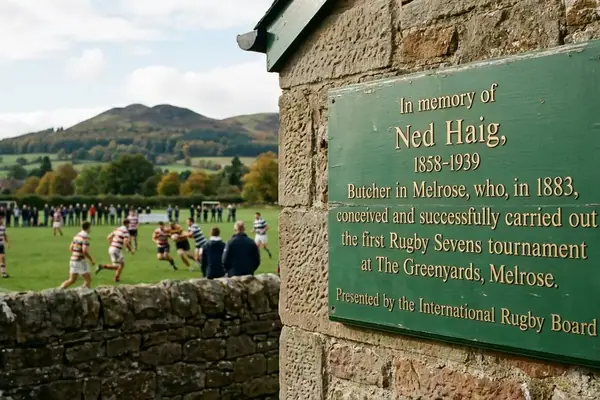
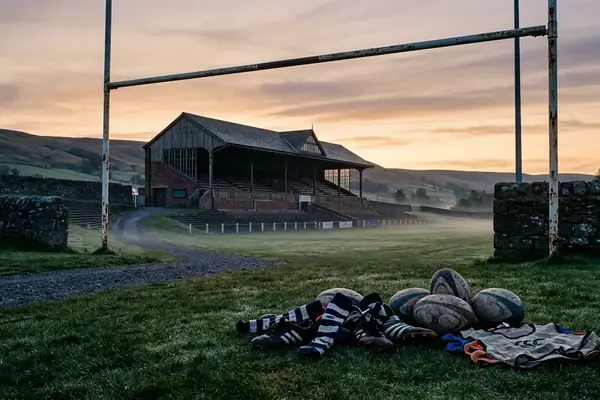
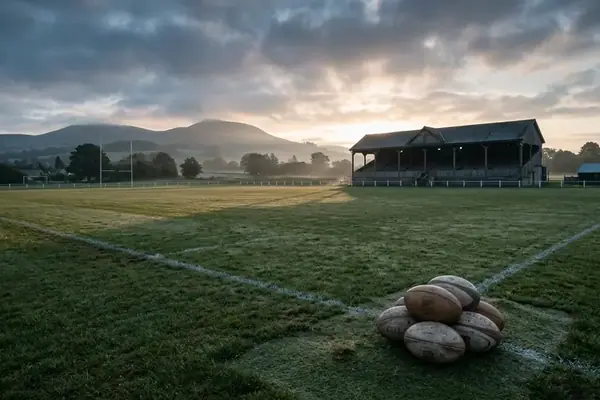
Where archival ledger entries detail, ground and roping costs recovered solely from same-day gate and entry receipts collected between 1883 and 1889. Organizers mapped the usable daylight from a mid-afternoon first kickoff against the number of matches required for all competing teams. They then locked the entire programme into one continuous afternoon. The daylight scheduling window compressed into roughly the 14:00 to 18:30 span typical of late-April afternoons in the Scottish Borders. The logistical lessons learned at the greenyards set the blueprint for global expansion.
Analyzing the Limitations of the Traditional Game
Traditional fifteen-a-side matches required too much time and exacted too heavy a physical toll to allow for a multi-round knockout tournament in one day. Spectator fatigue and the sheer volume of players required made standard rugby tournaments financially and practically impossible for small local clubs.
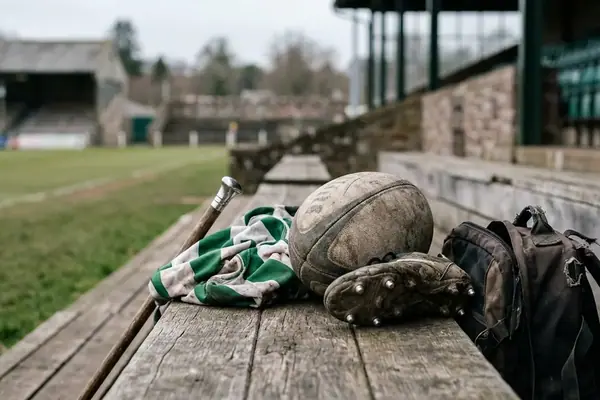
Full matches consumed two 40-minute halves plus injury stoppages. A minimum of 30 named players was needed per fixture once travelling reserves were counted. Clubs that tried to force full fifteen-a-side knockouts into one afternoon watched later ties abandoned in darkness and lost the paying crowd. By breaking down the traditional game into its core components, early organizers identified exactly which positions and minutes could be cut without losing the essence of the sport.
How to Structure the Original Seven-Man Squad
The reduction from fifteen to seven players required a radical rethinking of positional play, prioritizing speed and stamina over sheer mass. Captains tested reduced packs on the full pitch, assigning three men to form the scrum and line-out while the remaining four covered the backs. This preserved contested set-piece play without filling the field.
Early squads typically deployed three forwards, one half-back, and three backs, creating a vast amount of open space. Contests retained on full-sized pitches of roughly 100 yards by 70 yards demanded exceptional fitness. While these positional breakdowns became the standard, early Borders trials sometimes altered the forward-to-back split before the three-plus-four balance settled.
Managing Match Length and Player Turnarounds
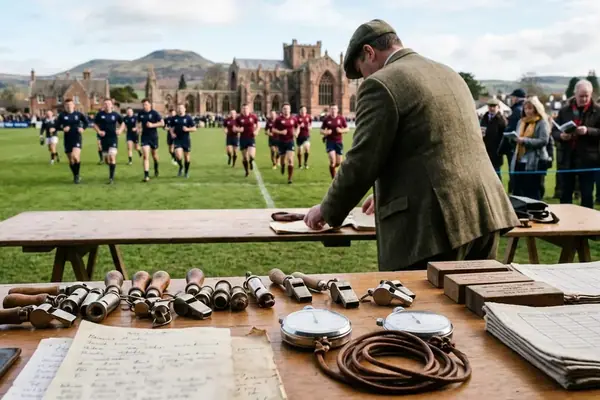
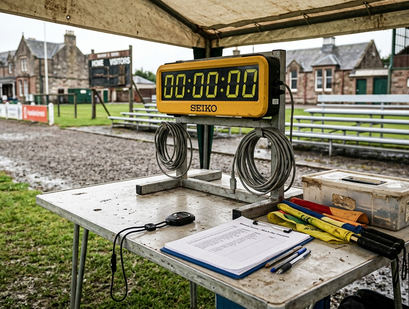
To fit an entire bracket into a single afternoon, match lengths were drastically reduced to short halves. Timekeepers carved the afternoon into rigid slots, shortening each half so that a five-to-ten-minute turnaround still left enough light for the final. Ordinary ties played as two halves of seven minutes. Finals occasionally lengthened to two halves of ten minutes.
The brief duration forced a high-tempo style of play, as teams had no time to slowly grind down their opponents. Turnaround times between matches were strictly enforced.
Adjusting Your Event Guide Timetable: The mandatory turnaround kept under 15 minutes from no-side to next kickoff, requiring players to manage their physical exertion meticulously.
Forward-back ratios and half lengths shifted when heavy autumn pitches replaced the firmer late-April surfaces of the original spring fixtures. Modern administrators can still look to this original event guide for scheduling efficiency.
Executing the Original Scoring Conventions
Scoring in the late 19th century prioritized goals over tries, fundamentally altering how teams approached the try line and kicking strategy. Captains instructed ball-carriers to cut infield toward the posts because a try served chiefly as the right to attempt the goal that actually decided the match.
Unconverted tries carried no independent point value in the 1883 to 1890 scoring tables. A try was often seen merely as the opportunity to kick a goal, meaning teams would sacrifice wide open space to ground the ball closer to the posts. Conversion kicks were taken from a mark opposite the exact grounding spot. Applying modern scoring math to historical match results will yield inaccurate tournament history records.
Running the Sudden-Death Knockout Bracket
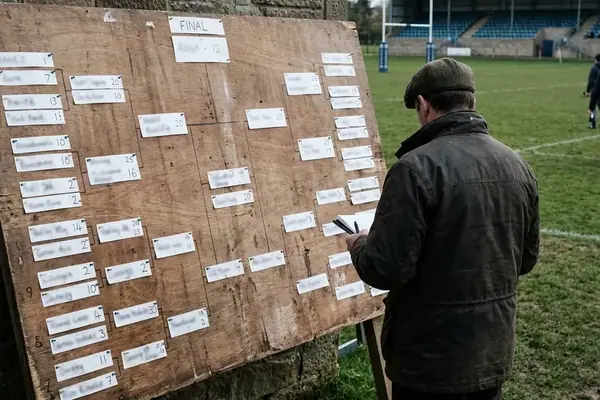
The tournament structure relied on a ruthless, single-elimination knockout format to keep the schedule moving. Single-elimination brackets were drawn on the morning of the tournament for fields of 8 to 12 clubs.
Draw officials inserted first-round byes to balance uneven club entries and required immediate sudden-death extra time so no drawn tie could stall the remaining programme. In the event of a draw, extra-time periods run as successive five-minute spells until the first score ensured a definitive winner without delaying subsequent fixtures. This relentless pace secured the format's lasting place among sporting innovations.
Tracing the Rules in Your Local History
Local researchers request the club’s earliest surviving minute books and printed programmes, then lay the recorded match lengths and scoring marks directly against the Borders template from the founding era. Fixture cards from 1883 to 1905 list kickoff times in five-minute increments. Scoring notations in those same cards still separate goals from tries.
Local Archive Comparison Checklist
- Retrieve earliest surviving fixture cards or handwritten brackets.
- Record printed match durations and turnaround notes.
- Transcribe original scoring marks (goals vs tries).
- Align findings against the three-forward, seven-minute standard.
Locate and review your own club's earliest surviving fixture cards or tournament brackets today to map your region's exact timeline of adoption.