Defining the Host Club Dynamic in One-Day Knockout Sevens
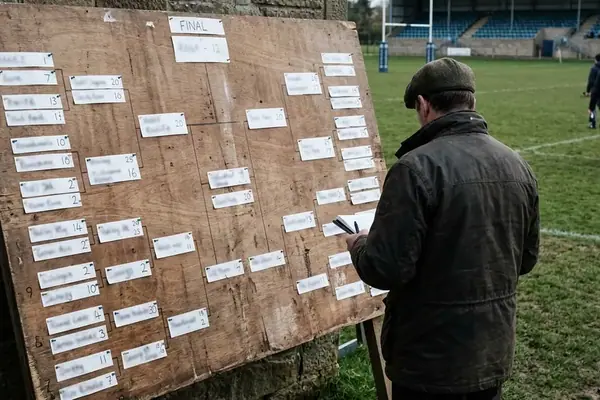
You stand on the touchline holding the afternoon’s printed draw, trying to price the local side’s realistic path through the bracket. Followers of winter rugby regularly apply standard fifteen-a-side home record assumptions to a spring sevens afternoon, expecting ground familiarity to carry the host club straight into the late stages. That approach misses what makes an invitation knockout unique.
In a single-day invitation tournament, home turf advantage is the sharp intersection of three separate forces: deep physical venue familiarity, zero pre-match travel, and the heavy organisational responsibility of running the entire event. Traditional invitation gatherings require a local fifteen-a-side club to throw open its gates to both neighbouring Borders rivals and invited touring specialists who focus exclusively on the shortened code. The host club serves as both a competing squad and the event operator.
Standard league home-and-away metrics fail here because a league calendar separates matches by full weeks of recovery. Once a tournament order of play compresses four or five high-intensity knockout ties into a single afternoon on the very same pitch, winter form records lose their predictive power. When I evaluate competing teams before the first tie kicks off, I separate a host squad’s genuine physical edge on their own grass from the operational drag of staging the festival, because a twelve can easily possess the first two advantages and still drop the third before reaching the semi-final.
Why League Home Records Mislead Knockouts
A winter league table prices a team’s strength over isolated Saturdays with six days to mend bodies and review tape. A single-day knockout stacks consecutive hurdles minutes apart. This dynamic holds true specifically for a single-afternoon tournament played on the host club's own ground, whereas an event shifted to a borrowed venue removes pitch memory and a multi-day format alters the recovery math. On a packed Saturday afternoon, the clock between the final whistle of round one and the warm-up call for the quarter-final determines survival far more than a strong season record at the ground.
Pitch Geometry, Surface Conditions, and Zero Travel Fatigue
How much does knowing the exact bounce and slope of the paddock actually save a player’s legs over seven-minute halves? More than any chalked tactical board ever shows. A host player steps onto the grass carrying an instinctive map built across months of Tuesday and Thursday night training sessions.
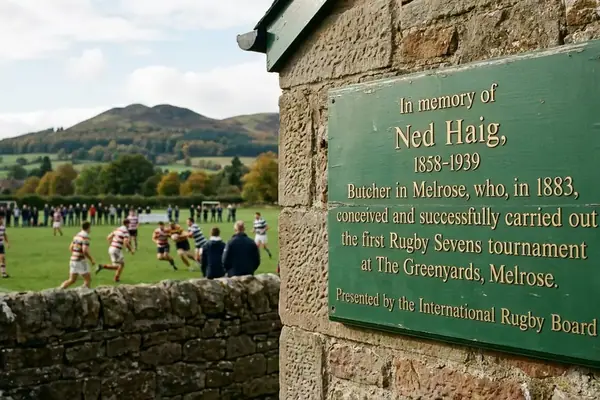
Every historic ground hides quirks in its geometry. At a traditional venue like The Greenyards, or any tightly framed Borders pitch, the home squad already knows the subtle gradients underfoot, the exact angle of the wind corridors whipping through the gaps between the stands, and which specific corners hold heavy water after a burst of spring rain. Visiting squads discover those boggy patches and swirling air currents mid-match. The home wingers and kickers adjust their footing and restart heights automatically.
Physiology adds a second quiet edge before the gates even open. Sleeping in your own bed and walking through a familiar dressing room warm-up without a cramped early-morning bus journey or a stiff hotel check-in preserves neuromuscular sharpness. The host players start the opening tie at their baseline rhythm while touring teams are still shaking the coach transfer out of their hamstrings.
Crowd Momentum and Spatial Discipline
Then comes the noise. During a tight second-half defensive set in a seven-minute half, a concentrated home crowd roaring from the bank creates an undeniable surge of adrenaline. That acoustic lift pushes tired defenders to make one more chop tackle or scramble back from a line break. Yet supporter energy only helps while the defensive shape stays intact—it adds no extra lungs to the bench, and it will never fix a broken spacing line if two tired forwards drift too narrow against a fast wider channel.
Guest Specialists, Emotional Drain, and Organizational Distractions
Newcomers to tournament analysis often look at a partisan crowd, a familiar pitch, and a fiery first-round victory by the host club and assume the locals are set to sweep the afternoon. If the second-round draw pits that host side against a neighbouring fifteen-a-side rival, local grass knowledge keeps them right in the hunt. When the bracket delivers an invited international or specialist sevens outfit, the geometry of the contest flips instantly.
Specialist touring squads train exclusively for the spatial brutality of the seven-a-side format. Their width, support angles, and restart retention traps are drilled for open pasture, whereas a host club spends around nine months of the year rehearsing fifteen-a-side forward pods and dense defensive phases. Meeting a pure sevens outfit delivers an immediate tactical shock that no amount of knowledge about the corner flag drainage can soften.
Off the field, the host squad battles a continuous energy leak that visiting specialists never touch. While an invited guest team retreats to a quiet corner of the changing pavilion to elevate their legs and take on fluids, the home players are surrounded by their own community. Matchday distractions pull at their focus from every angle:
- Last-minute ticket allocation requests and entry passes for late-arriving family members or club patrons.
- Brief sponsor handshakes, photograph requests, and well-wishers grabbing players along the touchline rope.
- The magnetic social pull of a packed home clubhouse between rounds, tempting players away from quiet physical recovery.
The Early Victory Trap: Winning an emotionally charged opening tie in front of cheering townsfolk feels like the peak of the afternoon, yet it drains vital glycogen and mental sharpness hours before the quarter-final and semi-final ties even kick off.
The telltale sign of this cumulative recovery trap appears during the turnaround window. When a host squad lingers trackside soaking in applause from the stands after round one, their warm-up clock for round two shrinks, leaving them flat-footed against a specialist guest side that spent the break strictly off its feet.
How Host Squads Separate Tournament Operations from On-Field Execution
Strict operational ring-fencing helps—within a single-afternoon club knockout—to keep a host squad competitive past the middle rounds. Elite host clubs separate tournament logistics from on-field execution by drawing a hard line well before matchday.
The working protocol begins at least forty-eight hours before the opening whistle. From that threshold onward, the playing twelve and the coaching staff are stripped of every committee hosting obligation. A dedicated non-playing club liaison absorbs all gate queries, ticket allocations, sponsor hospitality, and media escort duties. On tournament morning, the home players operate inside a closed loop: they arrive at a cordoned-off preparation zone, run their standard activation routine, play their tie, and return directly to an isolated recovery room where club members and supporters cannot enter.
Matchday Checkpoints for Supporters and Analysts
You can judge whether a host club will survive the afternoon bracket by watching how they handle the roughly thirty minutes immediately following their first match, rather than how many points they ran up in the opening round. Track three specific indicators in order:
- Turnaround Recovery Zone Discipline: Watch whether the playing twelve vanish immediately into a quiet, shaded recovery area after the final whistle or stay pitchside chatting with supporters along the barrier.
- Warm-Up Clock Integrity: Note the exact count from the end of their previous tie to the start of their next activation drill; a rushed or truncated warm-up signals that hosting friction has already compromised their preparation.
- Tactical Pacing Against Fresh Legs: Observe whether the home halfbacks control the tempo at restarts and kicks to touch, or allow a rested guest specialist squad to drag them into an unstructured track meet.
When you fill in your bracket before the opening whistle blows, do you weight a host club's deep familiarity with every blade of their own grass higher than an invited specialist squad's total freedom from off-field duties?