Morning Mist, Quiet Wynds and the Cost of Arriving at Midday
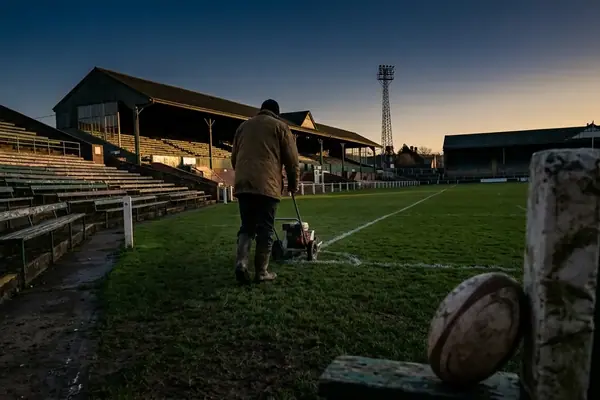
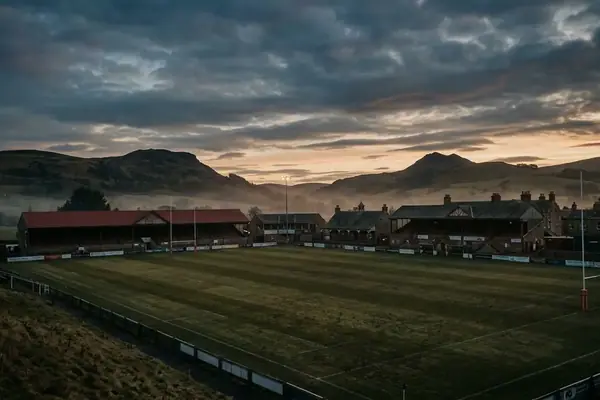
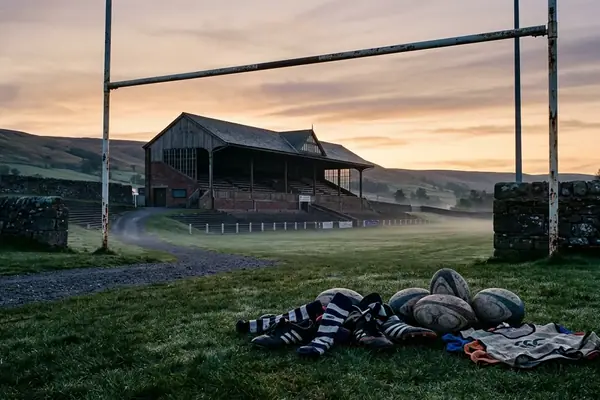
At 9:30 AM, the Greenyards smells of damp Borders turf and fresh white pitch paint. Mist hangs over the Eildon Hills. In Melrose, the narrow wynds are still quiet; at the ground, stewards clip lanyards into place. There is room to stop, look across the grass and understand how close everything sits together.
This is the part of tournament day I would protect first.
The familiar stadium habit is to arrive ten minutes before the first senior tie, find a place and wait for kick-off. At the Melrose Sevens, that timing sacrifices much of the setting. The Greenyards brings the day's rugby into one intimate ground. As the stands fill, the freedom to move, pause beside the perimeter and watch preparations at eye level contracts.
Early arrival gives that intimacy time to register. You can connect the pitch with the surrounding town, follow the morning's change of pace and see how the senior competition grows out of the curtain-raisers. Tournament history becomes easier to grasp when you can walk its setting rather than glimpse it across a crowded terrace.
Build your event guide around the opening of the gates. The afternoon knockout brackets supply their own urgency; the morning gives you space to understand what you are watching.
Youth Fixtures and Close-Up Warm-Ups Set the Rugby Rhythm
What is there to watch before the international invitational squads take over? Start with the youth and school fixtures. Their local pride and urgency give the morning its competitive edge. Watch a passage of play through to its conclusion rather than treating the curtain-raisers as background while you find refreshments.
That attention changes the day. You begin following rugby before the senior draw demands it, learning where the ground offers a clear view and how play looks from different positions along the touchline.
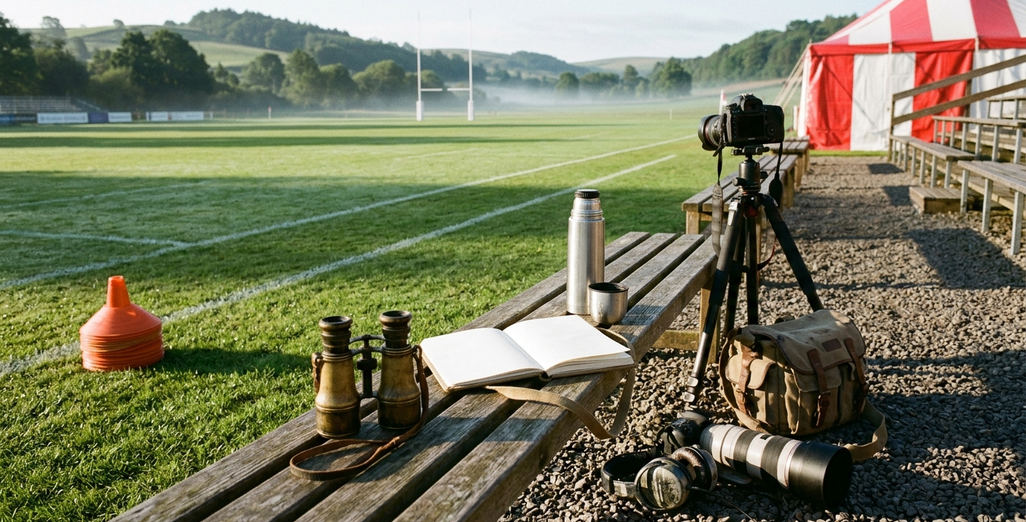
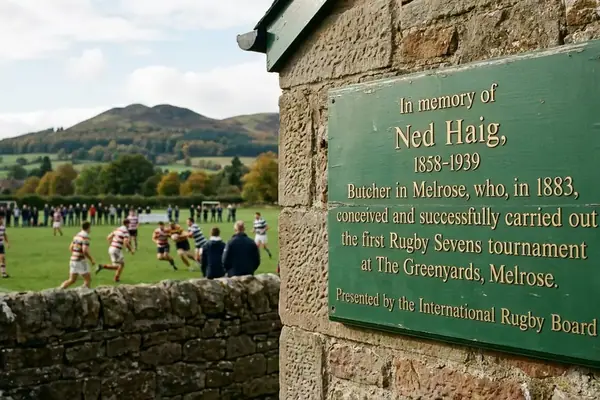
Use the still-open terracing to inspect heritage plaques and walk the accessible perimeter. By mid-afternoon, occupied viewing positions and busier circulation routes make that same exploration harder. A plaque read at leisure can give a name or occasion a place in your understanding of the ground.
Watch Feet Before Following the Ball
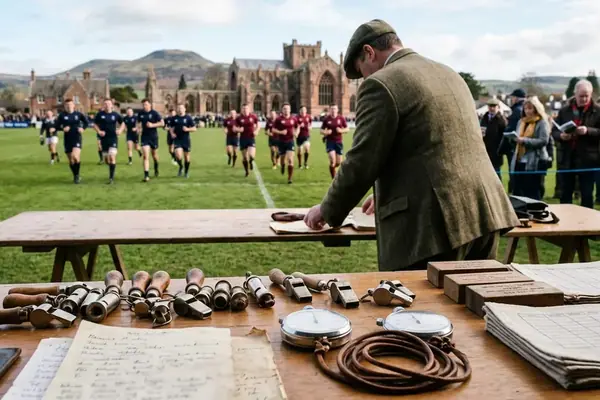
When the visiting sevens specialists begin their warm-ups, choose a permitted viewing position near the preparation area. Watch how they set their feet before receiving a pass, then how the next player adjusts to take the ball in stride. The Greenyards' natural slope and that morning's grass conditions give those movements a particular context.
For a newcomer, following one passing drill is enough. More experienced supporters can compare how successive competing teams organise the same preparation: the spacing, the footing and the rhythm between catch and release.
Check the Curtain-Raisers
Curtain-raiser timings change with the tournament format and Borders weather. Use the two hours after gate opening as your planning window, then check the published order of play for that year's sequence.
The Morning Fence Line Carries Melrose's Rugby Memories
The early crowd gives the Greenyards much of its character. Lifelong Borders club members, rugby historians and travelling players' families gather around the clubhouse before the main marquees fill. People still have time to stop. A conversation can last beyond a greeting.
At the perimeter fence, a question about a remembered Ladies' Cup upset can open a very particular account: where someone stood, which passage of play they recall, why that result has stayed with them. Those details bring tournament history into human scale. They also reward a better opening question than simply asking who will win today.
I would ask, “Which match here do you still talk about?” Then leave room for the answer.
Listen carefully to the distinction between recollection and the record. A supporter's account conveys the feeling of an afternoon; archived match results establish the score and progression. Keeping both in view makes the story richer without asking memory to do the work of an official record.
The practical benefits follow the same morning rhythm. You have more time for a local bakery, a programme seller or a club memorabilia stall before the High Street queue builds towards midday. Make those stops deliberately, leaving enough time to enter the ground while the touchlines remain open.
Buying a programme becomes more useful when you can read it before play accelerates. Pick out the competing teams, follow their route through the draw and keep it ready for recording match results.
Walk the Greenyards Before Choosing Your Viewing Position
For an unreserved ticket holder, the first useful task inside the ground is a short reconnaissance walk. Compare the main stand and open terracing from the areas your ticket permits. Check the view towards both ends, the angle across the touchline and any obstruction that only becomes apparent when you stand still.
Look at the sun, too. Notice its position relative to the pitch, main stand and open terracing, then think about how the light will shift during your stay. An appealing early view deserves a second check for glare and exposure later in the day.
Trace Your Route Before the Intervals
Once you understand the viewing options, trace the permitted route between the main pitch, warm-up areas and hospitality tents. Locate the access points you will actually use. The aim is to make your necessary movements familiar before halftime traffic tightens.
- Start with your viewing place: identify how to leave and return without cutting across another spectator's view.
- Check warm-up access: distinguish public viewing space from areas reserved for players and staff.
- Plan purchases early: look for your programme and preferred merchandise size while there is time to ask.
- Resolve arrival logistics: establish your Melrose drop-off or onward connection before tournament morning.
Moving arrival forward by ninety minutes gives these tasks breathing room. It reduces your exposure to queues, depleted programme stock and missing merchandise sizes, though early arrival cannot promise availability.
A reserved stand seat changes one part of the calculation: your place in that stand is held. The close-up warm-up view still belongs to the morning. Keep the reservation's convenience, and use the earlier interval to see what happens at ground level.
Build Your Morning Around Gates, Youth Finals and the Pipe Band
Start your itinerary with arrival in Melrose town centre two hours before the senior draw begins. Reconcile that target with the gate-opening time on your ticket and the published programme. The sequence matters more than imposing one clock time on every edition.
- Reach town with your approach settled. Complete your bakery stop and head towards the ground without using up the whole arrival window.
- Collect the official match programme at the gate. Check the day's order and identify the first senior teams you want to watch.
- Walk the touchline during the youth finals. Follow the rugby while checking accessible viewing positions and heritage plaques.
- Move towards the warm-up paddock as the first senior sides emerge. Stay within public areas and watch a complete preparation sequence.
- Settle into the stands fifteen minutes before the pipe band marches on. Finish your circuit while there is still time to take your place calmly.
Check your ticket's gate-opening time now, then book the earliest morning Borders Railway train to Tweedbank that fits your onward transfer, or a pre-9:30 AM parking shuttle if offered, so you reach the Greenyards turnstiles as the gates open.